Unlock the Magic: Your Essential Guide to the Best Time to Visit Japan
INTRODUCTION
Japan is a country where ancient traditions seamlessly blend with futuristic innovation, offering travelers a journey like no other. From the neon-lit streets of Tokyo to the serene temples of Kyoto, every corner tells a story. However, timing your trip right can make the difference between a good vacation and an unforgettable one. Understanding the rhythm of the year is key, which is why finding the Best Time to Visit Japan is the first step in your planning. Whether you dream of seeing Mount Fuji shrouded in cherry blossoms or hiking through vibrant autumn foliage, knowing what to expect from the different japan seasons, cherry blossom season will help you craft the perfect itinerary.
OVERVIEW & LOCATION
Japan is an archipelago stretching from the Sea of Japan to the Pacific Ocean, offering a diverse range of climates and landscapes. The main islands are Honshu, Hokkaido, Kyushu, and Shikoku, each with unique characteristics. Most first-time visitors stick to the “Golden Route,” which connects Tokyo (in the Kanto region) with Kyoto and Osaka (in the Kansai region).
The location of these destinations varies significantly in terms of latitude. Northern Hokkaido offers cool summers and snowy winters, while subtropical Okinawa in the south boasts warm weather year-round. This geographical diversity means that whenever you choose to travel, there is likely a part of Japan experiencing ideal weather for your preferred activities.
BEST TIME TO VISIT
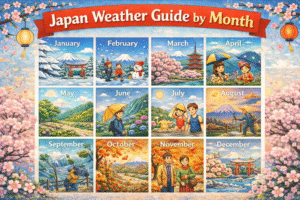
The Best Time to Visit Japan is generally considered to be spring (March to May) and autumn (September to November). During these periods, the weather is mild, skies are clear, and the scenery is at its most spectacular.
Spring (March-May): This is when the country turns pink with sakura (cherry blossoms). The japan seasons, cherry blossom season typically starts in late March in the south and moves northward through April. It is a time of celebration, with “hanami” (flower viewing) parties happening in parks everywhere. However, it is also peak tourist season, so booking accommodations months in advance is essential.
Summer (June-August): Early summer brings the rainy season (tsuyu) to most of the country, except Hokkaido. By July, the rains usually give way to intense heat and humidity. Despite the weather, summer is festival season. Events like the Gion Matsuri in Kyoto and massive fireworks displays make this a vibrant time to visit.
Autumn (September-November): Many travelers consider this the absolute best time to go. The heat and humidity of summer fade, replaced by crisp, cool air. The koyo (autumn leaves) turn the mountains fiery red, orange, and yellow. This is a photographer’s dream and a hiker’s paradise.
Winter (December-February): Winter is generally cold but sunny, especially on the western side of Honshu. It is the best time to visit Tokyo and Kyoto without the crowds. For snow sports enthusiasts, Hokkaido offers some of the best powder skiing in the world.
THINGS TO DO / TRAVEL GUIDE
Planning your activities is just as important as choosing the right dates. Here is a breakdown of the essential experiences, timed perfectly for when to visit Japan.
Cultural Immersion in Kyoto
Kyoto is the cultural heart of Japan. Regardless of the season, a visit to the Fushimi Inari Shrine, with its thousands of vermilion torii gates, is a must. For a historical deep dive, head to the Arashiyama Bamboo Grove. If you are visiting during the japan seasons, cherry blossom season, the Philosopher’s Path in Kyoto is absolutely magical.
Modern Marvels in Tokyo
Tokyo is a city of endless energy. Spend a day in Shibuya to witness the famous “Scramble Crossing,” and take a photo with the Hachiko statue. For a panoramic view of the city, visit the Tokyo Skytree or the Tokyo Metropolitan Government Building (which is free!). If you are trying to find the Best Time to Visit Japan to avoid the summer humidity while still enjoying outdoor dining, late autumn in Tokyo is perfect.
Nature and Onsen
No trip is complete without soaking in an onsen (hot spring). Hakone is a popular destination near Tokyo, offering views of Mt. Fuji. For something more remote, consider visiting the snow monkeys in Nagano, where macaques bathe in natural hot springs during the winter.
Practical Tips
-
- Time: Allow at least 3 hours for major sites like the Imperial Palace in Tokyo or Kinkaku-ji in Kyoto.
-
- Costs: A basic meal costs between 1,000 to 2,000 yen. Transportation is efficient but can add up; consider a JR Pass if traveling between multiple cities.
-
- Etiquette: Always remove shoes when entering homes, temples, or ryokans. Be quiet on public transport.
TRANSPORTATION & ACCESS
Japan’s transportation system is the envy of the world. It is fast, clean, and incredibly reliable.
The Shinkansen (Bullet Train)
The Shinkansen is the best way to travel between major cities. The “Nozomi” trains are the fastest, connecting Tokyo and Osaka in about 2 hours and 30 minutes. Note that the Japan Rail Pass does not cover the Nozomi trains, so check your ticket options carefully.
Local Transit
In cities, the subway and bus networks are extensive. IC cards like Suica or Pasmo (or their mobile app equivalents) are essential. You simply tap to pay for trains, buses, and even vending machine purchases.
Airports
Most international flights arrive at Narita (NRT) or Haneda (HND) in Tokyo, or Kansai International (KIX) near Osaka. From there, the N’EX train or limousine bus will take you straight to the city center.
PRACTICAL TRAVEL TIPS
Safety: Japan is one of the safest countries in the world. You can walk alone at night without worry, and lost items are usually returned. However, always be mindful of your surroundings.
Money: While Japan is becoming more card-friendly, many small restaurants, shops, and temples still only accept cash. Always carry a decent amount of yen.
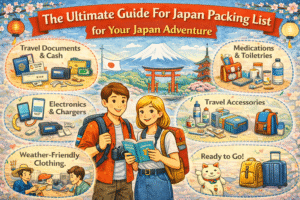
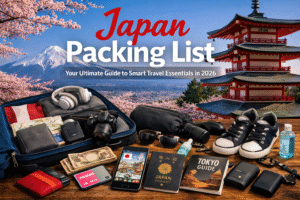
Packing: Pack layers. Evenings can get cool, especially in spring and autumn. Bring slip-on shoes for easy removal. A portable Wi-Fi device (Pocket Wi-Fi) or a local eSIM is highly recommended as free Wi-Fi is not always reliable.
Gifting: If you receive a gift or buy souvenirs (omiyage), presenting them with both hands is a polite gesture.
COMMON MISTAKES TO AVOID
-
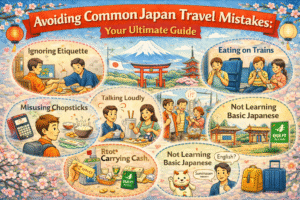
- Underestimating Distances: Japan is larger than it looks on a map. Traveling from Tokyo to Kyoto takes half a day. Don’t try to squeeze too many cities into a short trip.
-
- Not Booking Accommodation Early: Especially during the japan seasons, cherry blossom season and autumn foliage peaks, hotels sell out months in advance.
-
- Ignoring Rush Hour: Trains from 7:30 AM to 9:00 AM and 5:00 PM to 7:00 PM are packed. Plan your sightseeing to avoid being crushed in the commute.
-
- Walking While Eating: It is considered bad manners to eat or drink while walking on the street. Stand to the side to enjoy your food.
CONCLUSION
Japan is a destination that rewards preparation. By aligning your travel dates with the climate and cultural events, you ensure that every moment is enjoyable. Whether you are marveling at the golden hues of autumn leaves or enjoying the cool breeze of early summer, there is no bad time to explore this fascinating country—it is simply a matter of matching your interests to the season. There is a reason why so many people try to pinpoint the Best Time to Visit Japan; doing so allows you to witness nature and culture in perfect harmony. From the bustling cities to the quiet countryside, Japan offers an experience that stays with you long after you return home. Make sure to consult the calendar of japan seasons, cherry blossom season dates as you plan, and get ready for the trip of a lifetime.
FAQs
1. When is the cheapest time to visit Japan?
The cheapest times to visit Japan are mid-January to early February (after New Year’s holidays) and late May (after the Golden Week holiday rush). These periods offer lower airfare and hotel rates but fewer seasonal festivals.
2. Do I need a visa to enter Japan?
Citizens of many countries, including the USA, Canada, the UK, and Australia, do not need a visa for stays of up to 90 days for tourism. However, you must have a passport valid for the duration of your stay.
3. Can I use credit cards in Japan?
Major hotels, department stores, and chain restaurants accept credit cards. However, many local eateries, bars, and smaller shops are cash-only. Always carry some yen.
4. Is the JR Rail Pass worth it?
The JR Pass can be worth it if you plan to travel long distances quickly (e.g., Tokyo to Kyoto to Hiroshima) within a short period. If you are staying in one region, it is often cheaper to buy individual tickets.
5. What is the best way to get connected to the internet?
The most convenient option for travelers is a Pocket Wi-Fi device (rented at airports) or purchasing a travel eSIM. This allows you to use Google Maps and translation apps effortlessly.