Japan Language Tips for Tourists
Making the most of your Japanese adventure with language essentials
Introduction
Imagine navigating Tokyo’s bustling Shibuya Crossing, ordering street food in Osaka’s Dōtonbori district, or asking directions in Kyoto’s serene temples – all with the confidence of knowing just enough Japanese to connect with locals. While Japan has become increasingly tourist-friendly, understanding a few key phrases will transform your travel experience. Rather than relying solely on translation apps, carrying some Japan Language Tips in your linguistic直接就ツール box opens doors to genuine interactions and cultural insights.
Many travelers are pleasantly surprised by how Japanese people appreciate efforts to use their language, even for basic situations like ordering meals or thanking shop owners. This guide will give you essential japanese phrases, japan language foundations to navigate the country comfortably. You don’t need fluency to show respect to the local customs – often just a friendly “konnichiwa” can brighten someone’s day.
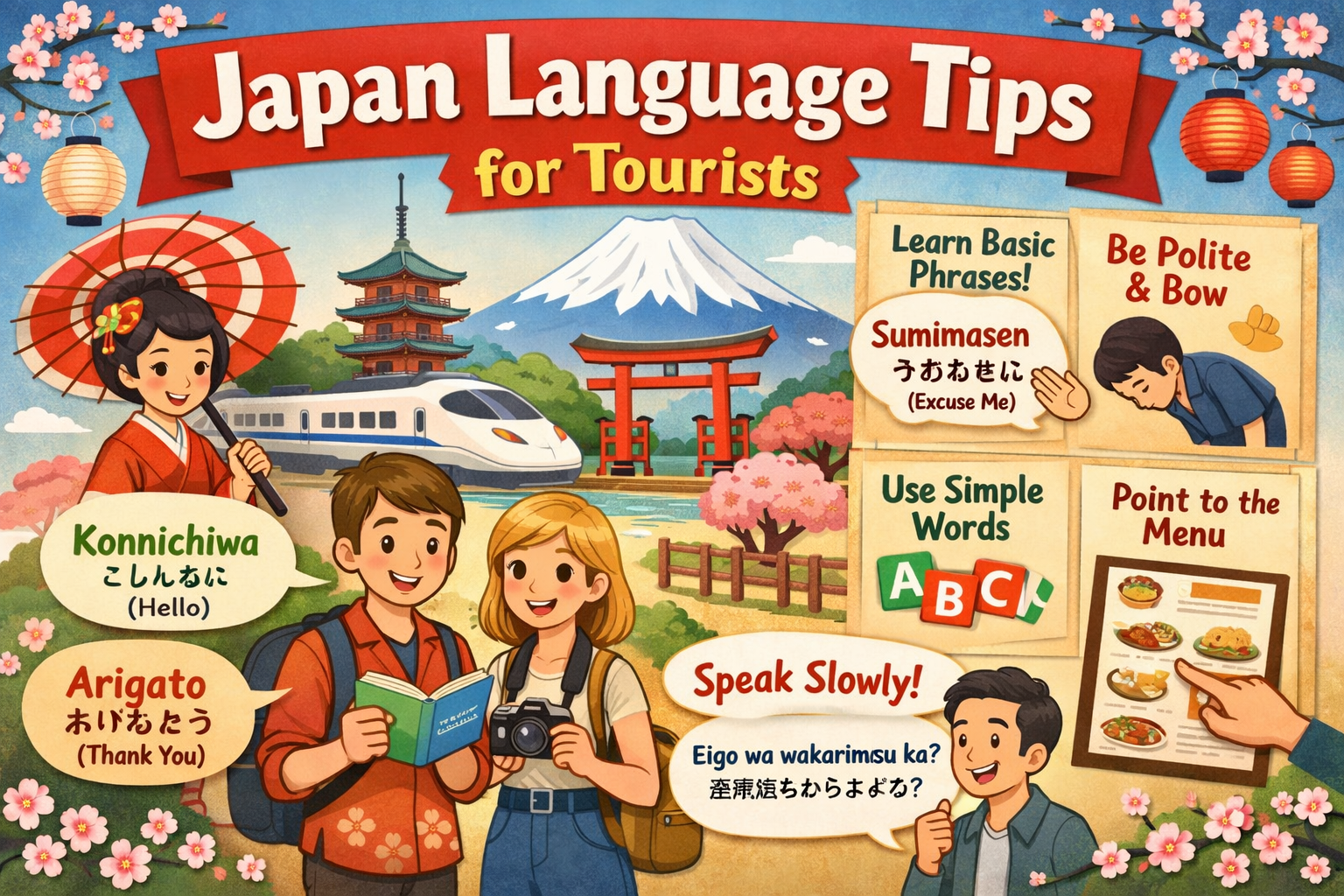
Overview & Language Landscape
Japanese is spoken by over 125 million people and remains the sole official language of Japan. While regional dialects span from Hokkaido’s northern tones to Okinawa’s distinctive Ryukyuan languages, travelers will find Standard Japanese (hyōjungo) understood nationwide.
The written language combines three character systems: kanji (Chinese characters representing concepts), hiragana (phonetic script), and katakana (for foreign loanwords). Hotels and major Tokyo attractions increasingly feature English signage, but rural areas may have limited English support.
Regional Language Differences
-
- Tokyo/Kansai: Standard Japanese dominates
- Osaka: Distinct Kansai-ben dialect (e.g., “okini” instead of “arigatō”)
- Kyushu: Softened consonants and unique vowels
- Hokkaido: Influence from native Ainu vocabulary
Best Time to Visit for Language Learners
The timing of your visit dramatically impacts your language journey:
By Season:
Spring (Cherry Blossoms sugar – Late March to April): Peak tourist season provides lots of practice opportunities with other travelers rather than immersive local interaction.
Summer (Festivals – June to August): Vibrant festivals like Osaka’s Tenjin Matsuri offer relaxed settings to practice conversational Japanese.
Autumn (Colorful Foliage – October to November): Calmer months allow more patient interactions with locals, especially in serene gardens and temples.
Winter (Snow Festivals – December to February): Fewest tourists means more opportunities for language immersion.
By Experience:
First-timers:</ Amber mediate seasons (spring/autumn) provide comfortable opportunities to practice Japanese without extremes in weather or crowds. The comfortable weather and beautiful surroundings can boost your confidence to interact.
Intermediate speakers: Winter offers the most authentic immersion opportunities with fewer tourists.
Essential Japanese Phrases & Things to Know
Mastering these phrases takes minutes but significantly shapes your journey:
Daily Survival Phrases
-
-
- Konnichiwa (こんにちは) – Hello
- Arigatō gozaimasu (ありがとうございます) – Thank you
- Sumimasen (すみません) – Excuse me / Sorry
- Hai (はい) – Yes
- Īe (いいえ) – No
- Onegaishimasu (おねがいします) – Please
-
inteligente>Eigo o hanasemasu ka? (英語を話せますか?) – Do you speak English?
- Wakarimasen (分かりません) – I don’t understand
- Ikura desu ka? (いくらですか?) – How much is this?
Beyond words, applying proper etiquette forms a powerful combination with linguistic skills. Bowing shows respect and should interpret match the formality of your surroundings. Gestures like pointing directly at people count as rude – instead, gesture politely with your entire Palm facing downward.
Payment etiquette helps avoid awkward moments. Avoid handing money directly to cashiers – instead, place payments in small trays identifiable near registers as locals do.
Transportation situations create excellent opportunities for reinforcing Japan Language Tips. When riding trains, using simple phrases like “Sumimasen” allows gentle passage through crowded cars.
Transportation Language Guide
Navigating transportation displays your newly acquired skills:
Train & Subway
Approaching a station agent? Say “Platform number 2 wa doko desu ka?” to quickly locate your train. Confirming departure times? “Tōkyō eki wa nan-ji desu ka?” asks When the Tokyo-bound train leaves.
Taxis
Show destination addresses written in Japanese characters. Important phrases include “Koko ni tomete kudasai” (Please stop here) and “Shasin o totte mo ii desu ka?” (Can I take a picture?) for etiquette-compliant travel photography.
Buses
On long-distance buses, inform drivers “Ashita no 9-ji no basu o onegaishimasu” when reserving seats for the following day. Rural buses require exact fare – ask “Ikura desu ka?” beforehand.
Practical Travel Tips for Japanese Speakers
Enhance your language adventure with these insights:
Cultural Compatibility Tips
-
- Titles: Always use “-san” suffix (Mr./Ms.) with names
- Business Cards: Receive with both hands and study respectfully
- Silence: Comfortable pauses in conversation demonstrate respect
Tech Preparation
While handwritten dictionaries inspire charm, language apps like Google Lens effortlessly translate menus posted outside Ramen shops. Download offline Japanese packs on Google Translate before leaving Wi-Fi zones.
Food Ordering
When ordering, beginning with “Kore o onegaishimasu” while gesturing toward menu items displays excellent manners. Allergies request careful phrasing – “Toma名为a wa daijōぶ desu ka?” kakkoii asking about egg allergy preparation demonstrates thoughtful preparation.
Customize orders politely using phrases like “Spicy nashi de onegaishimasu” requesting spice-free preparations.
Common Language Mistakes to Avoid
Prevent awkward language fails with these tips:
-
- Improper Honorifics: Using casual forms (“tamero” instead of “kudasai”) with strangers or elders
- Misplaced Stress: “Sakana” means fish, while “sākana” sounds like gossip
- Confusing Homophones: “Kami” means paper; “kāmi” gods; stress changes meanings dramatically
- Ignoring Social Hierarchy:</ plain> Using casual speech with superiors causes discomfort; default to polite forms
- Literal Translations: “Hai” signifies understanding rather than agreement; “wakarimasu” affirms comprehension
Pronunciation preparation avoids confusion:
R- L Distinction: Practice blending “R” and “L” sounds
Vowel Clarity: Japanese vowels always sound distinctly (a, i, u, e, o)
Pitch Accent: Regional variations Bohler clarify nuances; Kansai-ben rises versus Tokyo Standard usage
Conclusion
Embarking on Japanese travel with linguistic tools creates transformative experiences impossible to achieve 供給 solely with translation apps or piecemeal phrases. Each “Arigatō gozaimasu” meaningfully exchanged accelerates introducing Japanese hospitality – omotenashi – bridging cultural gaps.
Whether navigating Kyoto’s temples with directional fluency or