Unlocking Japan: Is the Japan Rail Pass Right for Your Trip?
Introduction
Planning your first trip to the Land of the Rising Sun can feel like a logistical puzzle. Between navigating neon-lit cities, serene mountain temples, and sprawling countryside, figuring out how to get around is often the biggest hurdle. This is where the magic of Japan’s train system comes in, offering a fast, efficient, and scenic way to traverse the archipelago. To make the most of your journey, understanding the benefits of the Japan Rail Pass is essential. It serves as your golden ticket to exploring the country with ease. This comprehensive japan train travel guide will walk you through everything you need to know.
Overview & Location
The primary subject of this guide is the legendary JR Yamanote Line, a loop track that encircles the heart of Tokyo. While the Japan Rail Pass covers the entire country, knowing how to navigate the capital is your first step to mastering travel here. Tokyo is not just a city; it’s a massive metropolitan sprawl comprised of distinct neighborhoods, each with its own vibe. From the fashion-forward streets of Harajuku to the historic imperial grounds of Chiyoda, the train system connects these worlds seamlessly.
Although Tokyo is the hub, the true beauty of the rail network lies in its reach. With the right JR Pass guide, you can easily hop from the urban jungle of Tokyo to the cultural treasures of Kyoto or the snowy peaks of Hokkaido. Understanding the geography of the rail lines helps you visualize Japan not as a series of disconnected stops, but as an interconnected web of culture and scenery.
Best Time to Visit
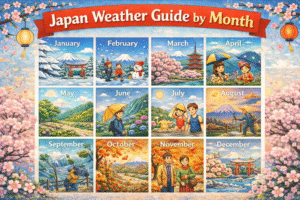
Timing your trip is just as important as choosing your transportation. Japan offers distinct experiences depending on the season.
-
- Spring (March-May): Famous for Cherry Blossoms (Sakura). The weather is mild, but crowds are heavy. Booking trains in advance is crucial.
- Summer (June-August): Hot and humid, but filled with vibrant festivals (Matsuri). Great for mountain escapes like Kamikochi.
- Autumn (September-November): Often considered the best time. The heat subsides, and the koyo (autumn leaves) turn landscapes into red and gold masterpieces.
- Winter (December-February): Cold but beautiful, offering fewer crowds and the opportunity to see snow in places like Kanazawa or take advantage of skiing in Nagano.
If you plan on chasing the autumn colors or the sakura front, your itinerary will span from south to north. This is where having the Japan Rail Pass becomes financially and logistically advantageous, allowing you to travel spontaneously as the seasons change.
Things to Do / Travel Guide
When you have your rail pass in hand, the country opens up. Here are the top experiences accessible via the JR network:
1. Tokyo to Hakone (Mount Fuji Views)
Take the Shinkansen (Bullet Train) to Odawara Station, then switch to local transport to get views of the iconic Mount Fuji. The japan train travel experience here includes the “Romancecar” and Hakone Tozan Railway.
2. The Golden Route: Kyoto & Osaka
These cities are the cultural heart of Japan. Use the pass to visit Fushimi Inari Shrine in Kyoto and Dotonbori in Osaka. They are only 30 minutes apart by JR Rapid train.
3. Hiroshima & Miyajima
A sobering yet beautiful destination. The Japan Rail Pass covers the Sanyo Shinkansen to Hiroshima. From there, a short JR ferry ride takes you to the sacred island of Miyajima.
4. Tokyo Island Hopping (Izu Islands)
For something different, the JR East JR Passes often cover the Shinkansen to Atami, followed by local JR trains and ferries to the tropical Izu islands.
Practical Tip: Always look for the JR logo at station gates. Non-JR trains require separate tickets.
Transportation & Access
Navigating the stations can be overwhelming, but the signage has improved drastically in recent years. Here is how to handle access like a pro:
-
- The Shinkansen: The backbone of the Japan Rail Pass. Green Cars (First Class) are available for an upgrade, offering more legroom.
- Local Trains: Look for the JR logo. In Tokyo, the Yamanote Line is the main loop you will likely use daily.
- Reservations: You can make seat reservations for free at any JR ticket office (Midori-no-madoguchi). This is highly recommended during peak travel times.
For first-timers, downloading an app like “Navitime” or “Google Maps” is a lifesaver. These apps allow you to filter specifically by JR lines, ensuring you don’t accidentally board a private railway train that isn’t covered by your pass.
Practical Travel Tips
To ensure a smooth journey, keep these etiquette and safety tips in mind:
-
- Silence is Golden: Keep your phone on silent mode and avoid talking loudly on trains. It’s considered a moving nap room.
- Line Etiquette: Always form orderly lines on the side of the platform markers indicated for your train car number.
- Luggage: Large suitcases (over 160cm total dimensions) require a special reservation for the Shinkansen. You cannot board with them otherwise.
- IC Cards: Even with a Japan Rail Pass, you will need a Suica or Pasmo card for subways and buses not run by JR.
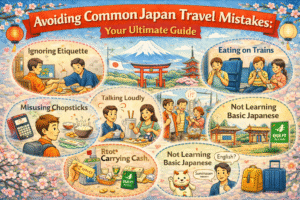
Common Mistakes to Avoid
Don’t let simple errors derail your vacation. Here are the most common pitfalls:
-
- Buying the Pass Unnecessarily: If you are only staying in Tokyo, the pass might not pay off. However, if you are doing the Tokyo-Kyoto-Osaka triangle, it almost always saves money.
- Forgetting to Activate: You cannot use the pass immediately upon arrival if you buy it online/voucher. You must exchange the voucher for the physical pass at a JR office and set a start date.
- Not Checking “Nozomi” Trains: The fastest trains, Nozomi and Mizuho, are NOT covered by the standard Japan Rail Pass. Always look for Hikari or Sakura trains.
- Assuming all lines are JR: In big stations like Shinjuku, there are multiple exits. Make sure you enter the JR gates, not the private lines like Odakyu or Keio.
Conclusion
Japan is a country that rewards the curious traveler. Whether you are chasing street food in Osaka, meditating in Kyoto’s bamboo groves, or marveling at Tokyo’s futuristic skyline, the train is your constant companion. By securing a Japan Rail Pass, you are investing in freedom and efficiency. It removes the stress of buying individual tickets and allows you to focus on the experience itself. For the most up-to-date pricing and purchasing options, always consult a trusted jr pass guide, japan train travel resource before you fly. Happy travels!
FAQs
Is the Japan Rail Pass worth it for a 7-day trip?
Yes, if your itinerary involves significant distance. A round-trip Tokyo to Kyoto alone costs nearly the price of the pass. If you stay in Tokyo only, it is likely not worth it.
Can I use the pass for the Narita Express?
Yes! The Narita Express (N’EX) is fully covered by the Japan Rail Pass, making the airport transfer free and convenient.
Do I need to reserve seats for every train?
No. You can ride non-reserved cars on most trains without a reservation. However, during busy seasons (Golden Week, Obon, New Year), reservations are highly recommended to guarantee a seat.
What happens if I lose my pass?
Treat it like cash. It is generally non-refundable if lost. Keep it in a secure pocket or wallet at all times, as station staff will check it upon exit.
Can I upgrade to Green Car (First Class)?
Yes. You can purchase an upgrade at a ticket counter for the difference in price, even if you have a standard Ordinary class pass.