The Ultimate Osaka Travel Guide: Eat, Explore, and Embrace the City’s Electric Energy
Introduction
Imagine a city where the neon lights reflect off rain-slicked streets, the air is thick with the savory aroma of sizzling street food, and the sound of friendly banter spills out from tiny, lantern-lit bars. Welcome to Osaka, Japan’s dynamic culinary capital and a destination that perfectly balances ancient history with hyper-modern excitement. Often overshadowed by Tokyo, Osaka offers a more laid-back, food-obsessed vibe that captures the hearts of travelers looking for an authentic and unforgettable experience.
Whether you’re here to feast on Takoyaki, explore historic castles, or dive headfirst into the vibrant nightlife of Dotonbori, this comprehensive Osaka Travel Guide is your essential companion. For those looking to immerse themselves in the best osaka street food, osaka travel experiences, this guide will walk you through everything you need to know to plan the perfect trip.
Overview & Location
Situated in the Kansai region on the main island of Honshu, Osaka is Japan’s third-largest city and a major economic hub. It serves as the gateway to the western part of the country, strategically located between Kyoto and Kobe. The city is bisected by the Yodo River, which flows out into Osaka Bay, and is generally divided into two main areas: Kita (North) and Minami (South). Kita, centered around Umeda Station, is a bustling business district filled with gleaming skyscrapers, high-end department stores, and modern transportation hubs. Minami, the heart and soul of the city, is where you’ll find the famous Dotonbori canal, historic markets, and the city’s most iconic entertainment districts.
Culturally, Osaka is famously known as “Tenka no Daidokoro” (the Nation’s Kitchen), a title it held for centuries during the Edo period when it was the center of Japan’s rice trade. This mercantile history shaped the city’s pragmatic, outgoing, and humorous character. The local dialect, Kansai-ben, is more direct and punchy than standard Japanese, and the people are known for their warmth and approachability. This down-to-earth atmosphere makes Osaka feel incredibly welcoming, especially for first-time visitors to Japan.
Best Time to Visit
Choosing the right time to visit Osaka can significantly impact your experience, as the city’s weather and crowd levels change dramatically with the seasons. Here’s a breakdown of what to expect throughout the year:
Spring (March – May)
This is arguably the most popular time to visit, primarily for the cherry blossom (sakura) season. Parks like Osaka Castle Park and Kema Sakuranomiya Park burst into a sea of pale pink, creating a magical atmosphere for hanami (flower viewing) parties. The weather is mild and pleasant, but be prepared for massive crowds and higher prices for flights and accommodation. Book well in advance if you plan to visit during Golden Week (late April to early May).
Summer (June – August)
Summer in Osaka is hot and humid, with temperatures often soaring above 30°C (86°F) and a rainy season in June and July. Despite the heat, summer is a vibrant time filled with lively festivals (matsuri), fireworks displays, and summer specials at restaurants. If you can handle the humidity, you’ll be rewarded with energetic street life and fewer international tourists than in spring.
Autumn (September – November)
Many seasoned travelers consider autumn the best time to visit. The brutal summer heat subsides, replaced by crisp, comfortable air. The city’s maple trees and ginkgo biloba turn brilliant shades of red and gold, especially at temples and gardens like Sumiyoshi Taisha and Expo ’70 Commemorative Park. The autumn foliage season is a major draw, offering beautiful scenery with more manageable crowds than the spring sakura rush.
Winter (December – February)
Winters are cold but generally dry and sunny. While you won’t find snow in the city, the festive atmosphere is undeniable. The city is illuminated with stunning light displays, such as the Midosuji Illumination and the Winter Fantasy event at the Umeda Sky Building. It’s a great time to explore indoor attractions like museums and shopping malls, and to warm up with a hot pot (nabe) meal or a bowl of ramen.
Things to Do / Travel Guide
Osaka is packed with attractions that cater to all interests, from history buffs and foodies to thrill-seekers and shoppers. Here are the essential experiences you simply cannot miss, complete with practical tips to make the most of your visit.
1. Dotonbori: The Neon Heart of the City
No trip to Osaka is complete without a visit to Dotonbori. This iconic canal-lined street is the city’s most famous landmark, famous for its towering neon signs, including the legendary Glico Running Man and the massive mechanical crab of Kani Doraku. The area is a sensory overload in the best way possible. At night, the glowing signs reflect beautifully on the water, creating a cinematic scene that is pure Osaka. This is the ultimate place to indulge in osaka street food, osaka travel adventures.
Practical Tip: The best way to experience Dotonbori is on foot. Cross the Ebie and Tombori River Walk bridges for great photo opportunities. Try to visit twice: once in the late afternoon to see it come alive, and again after dark for the full neon impact.
2. Osaka Castle: A Symbol of Power
A tribute to Japan’s turbulent Warring States period, Osaka Castle is a magnificent structure that played a pivotal role in the unification of Japan. While the current main tower is a modern concrete reconstruction (completed in 1931), it houses an excellent museum detailing the history of Toyotomi Hideyoshi, the warlord who built it. The surrounding Nishinomaru Garden and the castle’s stone walls, moats, and gates are original and offer a glimpse into its formidable past. The view from the top floor observatory provides a stunning panorama of the city.
Practical Tip: To avoid long lines for the elevator, consider visiting early in the morning or on a weekday. The entrance fee is affordable (around 600 yen), and the park itself is free to enter, making it a great spot for a relaxing stroll.
3. Shinsekai & Tsutenkaku Tower: Retro Osaka
Step back in time in Shinsekai (“New World”), a district that developed before World War II with a futuristic vision. Its centerpiece is Tsutenkaku Tower, a retro-looking tower inspired by the Eiffel Tower. The area has a slightly gritty, nostalgic charm and is famous for kushikatsu (deep-fried skewers). You’ll find countless kushikatsu restaurants lining the streets, many of which have a strict “no double-dipping” rule for their signature tangy dipping sauce.
Practical Tip: Visit the “Billiken-sama” statue at the base of the tower. Rubbing the statue’s feet is said to bring good luck and grant wishes. Afterward, head to the top of the tower for a bird’s-eye view of the Shinsekai district and the city beyond.
4. Kuromon Ichiba Market: The “Kitchen of Osaka”
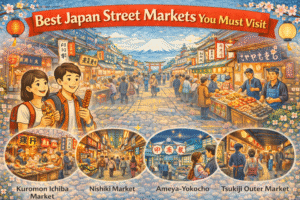
For a true taste of Osaka’s food culture, head to Kuromon Ichiba Market. This bustling public market, nicknamed “Osaka’s Kitchen,” is home to over 150 shops selling fresh seafood, produce, and a dazzling array of ready-to-eat delicacies. You can sample fresh sashimi, grilled scallops, giant crab legs, tamagoyaki (rolled omelet), and, of course, takoyaki (octopus balls) as you wander through the lively covered arcades.
Osaka Travel Guide wouldn’t be complete without mentioning this market as a must-visit for any food lover.
Practical Tip: Most shops open around 9 or 10 AM and start closing around 5 PM. It’s best to go in the morning on an empty stomach. Be prepared for crowds, especially on weekends.
5. Universal Studios Japan (USJ)
For a dose of pure entertainment, USJ is a world-class theme park that has become a massive draw in Osaka. It’s especially famous for “The Wizarding World of Harry Potter,” a meticulously crafted Hogsmeade and Hogwarts castle that feels like stepping into the movies. Other popular areas include Super Nintendo World and Minion Park. It’s a fantastic option for families, couples, or anyone who loves theme parks.
Practical Tip: This is one of the most crowded attractions in Japan. Buy tickets online in advance and consider arriving before the park opens. The park uses a virtual queuing system called “Express Pass” for popular rides; these sell out quickly, so plan accordingly if you want to guarantee a spot on attractions like the Harry Potter and Mario rides.
Transportation & Access
Navigating Osaka and getting to the city is surprisingly easy thanks to its incredibly efficient and extensive public transportation network.
Getting to Osaka
-
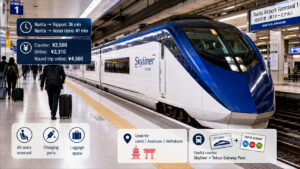
- By Air: Most international travelers fly into Kansai International Airport (KIX), located on an artificial island in Osaka Bay. From the airport, the JR Haruka Express train takes about 50 minutes to Shin-Osaka Station. Alternatively, the Nankai Rapi:t Express train connects Namba Station to the airport in a similar amount of time.
-
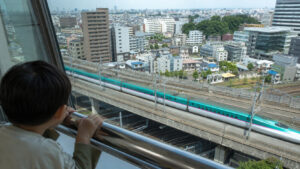
- By Train (Shinkansen): If you’re already in Japan, the Shinkansen (bullet train) is the fastest way to reach Osaka. The Tokaido Shinkansen line connects Tokyo to Shin-Osaka Station in about 2.5 to 3 hours. From Kyoto, it’s a mere 15-minute ride.
Getting Around Osaka
-
- IC Cards (Suica, ICOCA, etc.): This is the most convenient way to pay for all forms of public transport (trains, subways, buses). Simply tap the card on the reader when you enter and exit stations. You can buy and top them up at any station.
-
- Subway & JR Lines: Osaka’s subway system is a web of color-coded lines that cover the city comprehensively. The Midosuji Line (Red) is the main artery, connecting Umeda (Kita) with Namba and Shinsaibashi (Minami). The JR Loop Line is also incredibly useful for circling the city center and accessing major spots like Osaka Castle.
- First-Time Visitor Tip: Don’t worry about getting a separate pass for just the subway. Using a rechargeable IC card is the simplest and often most cost-effective method for most travelers. Download a navigation app like Google Maps or Japan Travel by Navitime to easily find train routes and times.
Practical Travel Tips
-
- Money: While Japan is becoming more card-friendly, cash is still widely used, especially at smaller restaurants, markets, and ticket machines. Always carry some yen with you. ATMs at 7-Eleven and Japan Post offices are the most reliable for foreign cards.
- Etiquette:
-
- Queueing: Always line up in an orderly fashion for trains and buses. Wait for people to exit before you get on.
-
- Eating & Drinking: It’s generally considered rude to eat or drink while walking. If you buy street food, finish it in front of the shop before moving on.
-
- Quietness: Keep your voice down on public transport and set your phone to silent mode. Speaking loudly on trains is frowned upon.
- Wi-Fi: Staying connected is easy. You can rent a pocket Wi-Fi device for your entire trip (pick up at the airport) or purchase a Japanese SIM card. Many cafes, convenience stores, and stations also offer free public Wi-Fi.
-
-
- Trash: Public trash cans are surprisingly rare in Japan. It’s common practice to carry your trash with you until you find a bin (usually near vending machines or in convenience stores) or return to your hotel.
Common Mistakes to Avoid
-
- Only Staying in Dotonbori: While Dotonbori is fantastic, don’t limit yourself! Explore the retro charm of Shinsekai, the sophisticated high-rises of Umeda, and the peaceful shrines of Sumiyoshi.
-
- Eating Only at Chain Restaurants: The true soul of Osaka’s food scene is in its independent, family-run eateries. Venture down side streets to find hidden gems.
-
- Not Using a Reloadable IC Card: Fumbling with individual train tickets for every journey is time-consuming and confusing. Get an IC card from day one.
-
- Forgetting to Check Last Train Times: The subway and JR trains stop running around midnight. Taxis are very expensive, so make sure you know the schedule for your last train home, or you could be in for a very long and pricey night.
-
- Overpacking Your Itinerary: Osaka has a relaxed pace. Rushing from one attraction to the next will make you miss the city’s atmosphere. Leave room for spontaneous exploration and leisurely meals.
Conclusion
Osaka is a city of incredible contrasts—where ancient temples stand in the shadows of futuristic skyscrapers, and where the world’s most meticulous culinary creations are perfected just steps away from greasy, glorious street food. It’s a city that invites you to eat, explore, and laugh along with its friendly, vibrant energy. From the dazzling lights of Dotonbori to the historic grandeur of its castle, Osaka offers a travel experience that is uniquely its own. Adding this dynamic city to your itinerary is a decision you won’t regret. Hopefully, this Osaka Travel Guide has given you the confidence and inspiration to dive deep into the heart of Japan’s culinary capital. For the most delicious memories, make sure your plans are centered around the incredible osaka street food, osaka travel scene.
FAQs
1. Is 3 days in Osaka enough?
Three days is a great amount of time for a first-time visit to Osaka. It allows you to cover the major highlights like Dotonbori, Osaka Castle, Shinsekai, and Kuromon Market, with a day trip to a nearby city like Kyoto or Nara. If you also plan to visit Universal Studios Japan, you might want to extend your stay to 4-5 days.
2. Is Osaka cheaper than Tokyo?
Generally, yes. While the cost of transportation is similar, accommodation, food, and entertainment in Osaka tend to be slightly more affordable than in Tokyo. A bowl of ramen or a plate of Takoyaki will often cost less in Osaka, and you can find great value hotels, especially around Namba and Umeda.
3. How do I get from Osaka airport to the city center?
From Kansai International Airport (KIX), the fastest options are the JR Haruka Express train to Shin-Osaka or Tennoji, or the Nankai Rapi:t Express train to Namba. Both take about 45-50 minutes. A cheaper but slower option is the airport limousine bus.
4. Do I need to learn Japanese for my trip?
You can get by with English in major tourist areas, as many signs are in English and Roman script. However, learning a few basic phrases like “Arigatou” (Thank you), “Sumimasen” (Excuse me), and “Konnichiwa” (Hello) will be greatly appreciated by the locals and make your trip smoother.
5. What is Osaka famous for?
Osaka is most famous for three things: its incredible food scene (earning it the nickname “Japan’s Kitchen”), its vibrant and historic merchant culture, and its friendly, outgoing people. Specific food items include Takoyaki, Okonomiyaki, and Kushikatsu.