Staying Safe in Japan: Your Essential Earthquake Preparedness Guide
Japan Earthquake Safety Tips Japan’s captivating blend of ancient traditions and cutting-edge modernity makes it a bucket-list destination for travelers worldwide. While you’re planning your adventure among Osaka’s dazzling street food, Kyoto’s serene temples, or Tokyo’s neon-lit districts, understanding Japan Earthquake Safety is crucial. Given that Japan experiences about 1,500 seismic events annually, knowing how to navigate these natural occurrences ensures your journey remains both magical and secure. This guide unpacks everything you need about without letting tremors disrupt your experience.
Overview & Location
Situated along the volatile Pacific Ring of Fire, Japan’s geological reality means seismic activity affects every region—from northern Hokkaido to subtropical Okinawa. Major cities like Tokyo, Osaka, and Sendai all have robust earthquake protocols woven into their urban fabric. Rather than inspiring fear, Japan’s relationship with seismic events demonstrates remarkable resilience. You’ll notice quake-proof architecture, public alert systems, and disaster preparedness centers—all testaments to a society that thrives despite geological challenges.
Best Time to Visit
While earthquakes can occur year-round, seasonal factors still influence travel planning:
– Spring (March-May): Mild weather coincides with cherry blossoms but also heightened seismic activity in some regions.
– Summer (June-August): Hot, humid conditions can complicate evacuation scenarios during emergencies.
– Autumn (September-November): Comfortable temperatures and fewer crowds make this ideal, though typhoon season overlaps.
– Winter (December-February): Generally lower seismic activity, but heavy snow in northern regions adds complexities.
Earthquake risk doesn’t prohibit visiting during any season—Japan’s infrastructure is always prepared—but autumn offers the most favorable overall conditions.
Earthquake Safety Essentials: What Travelers Must Do
When it comes to
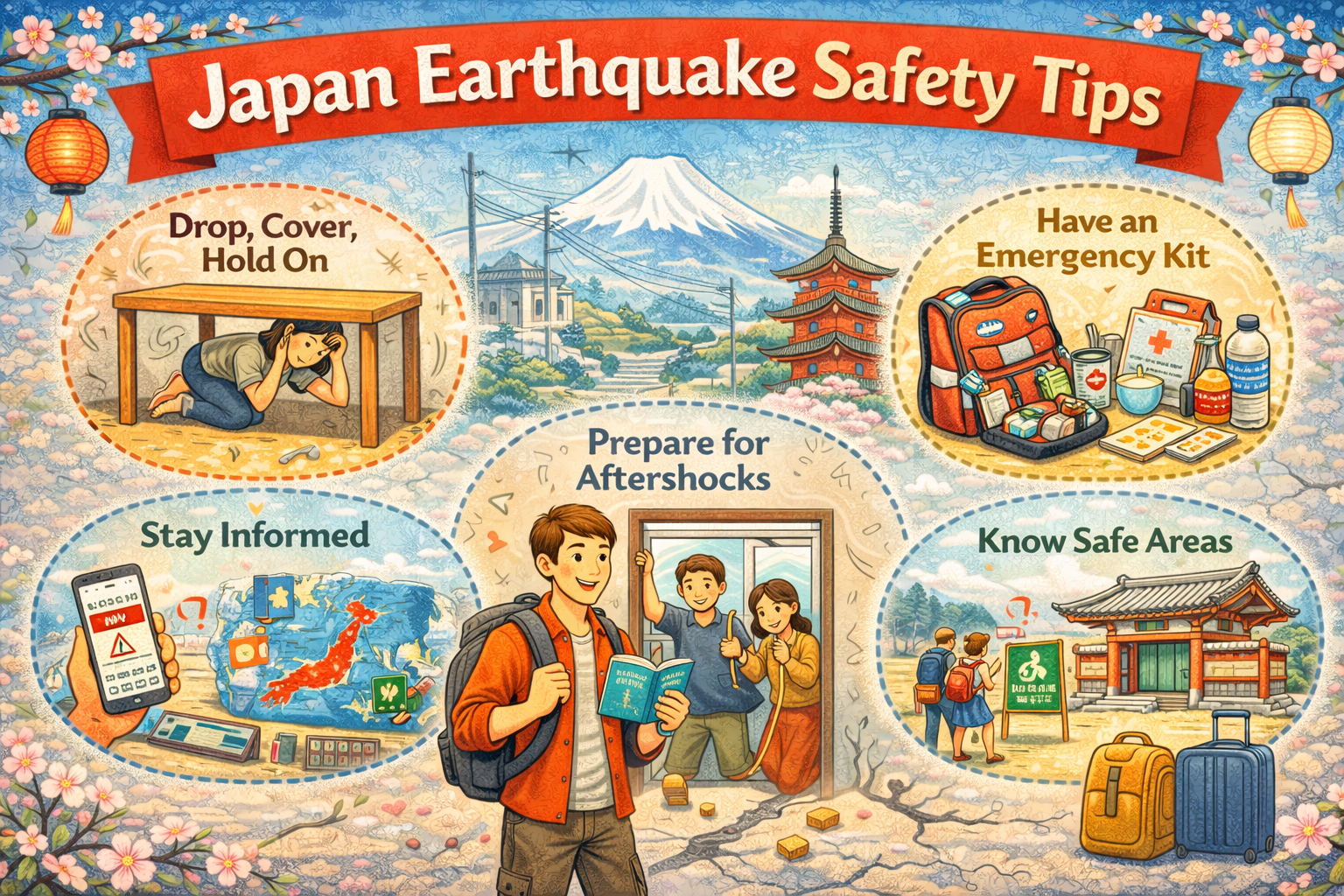
– Immediate Response: Drop, Cover, Hold On. Shelter under sturdy furniture or protect your head if near any falling objects.
– Evacuation Routes: Note marked exits in accommodations; Japanese buildings post clear multilingual evacuation maps.
– Emergency Apps: Download Japan’s official disaster app (Yurekuru Call) for real-time alerts in English.
etc.
knowledge, packing a small go-bag with water, medication, flashlight, chargers powerbank, insurance documents can simplify emergency evacuation scenarios. Most importantly, stay calm—locals train regularly for this scenario, so follow their lead.
Public Transit Protocols
Japan’s world-class transportation adapts during seismic events:
– Trains: Automatic braking systems activate during quakes. Remain seated until announcements; delayed departures prevent derailments.
– Subways: Stations have earthquake-resistant designs—stay underground until instructed otherwise.
– Air Travel: Narita private policy Haneda follow stringent protocols precisely addressing quake posalsrunway inspections delays flights.
Never panic if services halt temporarily—systems prioritize passenger safety above schedule Stampedes pose greater risk than minor tremors.
Practical Travel Tips
Beyond earthquake protocols:
– Language: Learn basic Japanese phrases like “Jishin desu!” (Earthquake!) or “Hinanjo wa doko desu ka?” (Where is the evacuation center?).
– Money: Keep small bills accessible; card systems go offline during major emergencies. Convenience stores serve as disaster supply centers.
– Communications: Text messaging often works when calls fail. Register for your country’s embassy alerts.
Common Mistakes to Avoid
– Riding glass elevators during shaking
– Checking social media instead of assessing surroundings
– Touching damaged electrical equipment
– Evacuating prematurely instead of securing immediate safety (don’t run outside while building debris falls)
– Creating personal transportation delays expense damages.
Conclusion
Exploring Japan remains overwhelmingly safe thanks to unparalleled
Japan Earthquake Safetydeep baths at Hakone or Nishiki Market’s grilled octopus without undue worry. Embrace preparedness, heed the science, and let Japan’s wonders unfold safely around you.
FAQs
1. How frequent are noticeable earthquakes in Japan?
Minor tremors occur daily—you might not even notice them. Significant quakes (magnitude 6+) happen roughly every few years but rarely cause major visitor disruption thanks to strict building codes.
2. Should I buy special travel insurance?
Absolutely. Verify your policy explicitly covers earthquake-related disruptions, including lodging/transit changes. Comprehensive Japanese travel assistance plans cost under $25/week.
3. What should travelers do immediately after a quake?
Check surroundings, avoid elevators, switch gas off if nearby, fill bathtubs with water reserves, and monitor NHK World Japan TV/app for advisories before moving. Stay indoors unless evacuation orders emerge.
4. Are coastal areas riskier?
Regions facing the Pacific coastline (e.g., Tohoku) have tsunami warning systems. If near coast, move uphill immediately post-quake. Inland locations like Kyoto/Nagoya don’t face tsunami threats. Waiting 20 minutes after shaking ceases for confirmation of tsunami risk
5. Should perceived threat cancel trips?
Not at all! Serious quake damage remains exceptionally rare—most infrastructure mitigates risks effectively. Staying updated and prepared maximizes your experience safely.
Japanese authorities provide multilingual interpretations.