Beat the Heat: Your Ultimate Guide to Japan in Summer
From the snow-capped peak of Mount Fuji visible against a clear summer sky to the sparkling fireworks festivals that paint the night, the country truly comes alive. Understanding how to navigate the heat, humidity, and crowds is key to enjoying the season to its fullest. This comprehensive guide is designed to help you embrace the warmth and uncover the hidden gems of a Japan in Summer adventure.
To truly make the most of your trip, you need to plan your days around the weather and local events. This is the prime season for experiencing outdoor culture, ocean activities, and fresh seasonal cuisine. Whether you are looking to hike in the Japanese Alps or explore the cool coastal towns of Tohoku, the logistics require careful attention. Mastering the art of japan summer travel, summer festivals japan itineraries will ensure you stay cool, safe, and energized throughout your journey.
Overview & Location
Japan’s summer typically runs from June to September, though the peak heat and humidity usually hit in August. The geography plays a huge role in your experience. The main islands of Honshu, Hokkaido, and Kyushu offer vastly different climates. While the urban centers of Tokyo and Osaka can become steamy concrete jungles, the mountainous interior offers a refreshing escape. The season is defined by the “tsuyu” (rainy season) in early summer, followed by the intense heat that drives locals and visitors alike toward the sea. Culturally, this is the time of “matsuri” (festivals) and “hanabi” (fireworks), deeply rooted in Shinto traditions to pray for good harvests and ward off evil spirits.
Best Time to Visit
Timing your visit depends largely on what you want to see and your tolerance for heat.
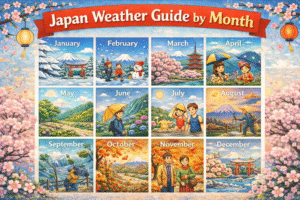
June (Early Summer): This is the start of the rainy season in most of the country. It’s lush and green, but expect wet weather. It is a great time for indoor activities like museum hopping in Kyoto or exploring the food basements of Tokyo department stores.
July (Festival Season): The rains start to clear in most regions (though Okinawa gets its rainy season later). This is when the major festivals kick off, such as the Gion Matsuri in Kyoto. It’s hot, but not yet the blistering peak of August.
August (Peak Summer): This is the hottest month nationwide. In Hokkaido, however, the weather is mild and perfect for nature lovers. It is the busiest month for domestic tourism due to the Obon holiday period. Expect high prices and crowds at popular sites.
September (Typhoon Season): The heat begins to break, but this is the peak of typhoon season. While risky, the latter half of the month can be lovely as autumn approaches in the north.
Things to Do / Travel Guide
There is a misconception that summer in Japan is purely about enduring the heat. In reality, the activities are tailor-made for the season. Here is how to fill your days:
-
- Attend a Hanabi Taikai (Fireworks Festival): These are not your average fireworks displays. They are massive cultural events drawing crowds of hundreds of thousands. The Sumidagawa Fireworks Festival in Tokyo is legendary. Go early to claim a spot, wear a “yukata” (light cotton kimono), and enjoy street food.
-
- Cool Off in the Japanese Alps: Head to Nagano or the Chubu region. Hiking trails at high altitudes offer spectacular views and cooler temperatures. The Kamikochi Valley is a summer staple for its pristine river and towering peaks.
-
- Explore the Coastline: The Izu Peninsula and Shonan beaches near Tokyo are havens for surfers and sunbathers. Further south, the islands of Okinawa offer some of the best coral diving and snorkeling in Asia.
-
- Chase Waterfalls: Visiting “UFO” shaped waterfalls in Nagano or the Nachi Falls in Wakayama is a refreshing way to spend an afternoon. The negative ions and cool mist are a welcome relief.
As you finalize your bucket list, remember that Japan in Summer is as much about the atmosphere as the destinations. The specific energy of japan summer travel, summer festivals japan events creates memories that last a lifetime.
Transportation & Access
Getting around during the heat requires a smart strategy. The golden rule is: take the train, avoid the bus if possible.
The JR Pass: If you are traveling between cities, a Japan Rail Pass is invaluable. The Shinkansen (bullet train) is air-conditioned, punctual, and comfortable. It connects major hubs like Tokyo, Kyoto, and Osaka efficiently.
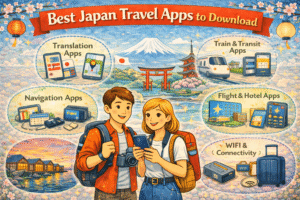
Local Transit: In cities, download navigation apps like Google Maps or Japan Travel by Navitime. Stations are massive; look for exit numbers to navigate efficiently. IC cards (Suica, Pasmo, or Icoca) are essential for tapping on and off subways and buses.
Long-Distance Buses: While cheaper than trains, overnight buses can be uncomfortable in high humidity. If you are on a budget, “Willer Express” is a popular bus operator, but bring a fan and water.
First-Timer Tip: Always carry a portable battery (power bank). Your phone will drain faster due to the heat and constant GPS usage for navigation.
Practical Travel Tips
Surviving and thriving in the Japanese summer requires specific gear and etiquette knowledge.
-
- Stay Hydrated (with a twist): Convenience stores (konbini) sell “Pocari Sweat” and “Aquarius”—isotonic drinks that replenish salts lost through sweat. Water alone isn’t always enough.
-
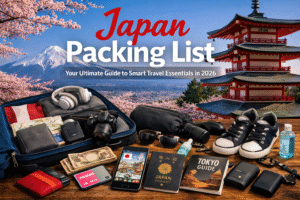
- Beat the Heat with Cooling Gear: Buy “Uchiwa” (hand fans) and “Tenugui” (thin hand towels) from any 100-yen shop. Many locals use cooling body wipes and apply sunscreen rigorously. Portable umbrella parasols are common for sun protection.
-
- Etiquette in Public: While it’s hot, walking around shirtless is generally frowned upon in cities. However, wearing a “samue” (work clothes) or loose linen is perfectly acceptable.
-
- Hygiene: Carry hand sanitizer. In crowded trains and festivals, germs spread easily. Many restrooms lack soap, so a small bottle of sanitizer is mandatory.
Common Mistakes to Avoid
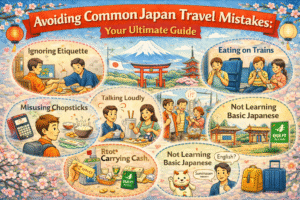
Even seasoned travelers can slip up when the heat index hits 40°C (104°F). Here are pitfalls to dodge:
-
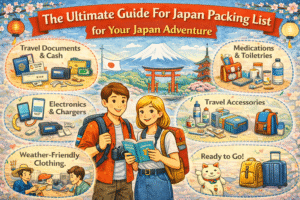
- The “10kg Luggage” Trap: Do not bring heavy suitcases if you plan to hop between cities. Coin lockers at train stations are lifesavers, but dragging a bag through crowded summer streets is miserable. Travel light.
-
- Over-Scheduling: Do not try to visit five temples in one day in Kyoto during August. You will collapse from heat exhaustion. Plan one major outdoor activity in the morning and one in the late afternoon, with a long indoor break (lunch, nap, or shopping) during peak heat hours (12:00 PM – 3:00 PM).
-
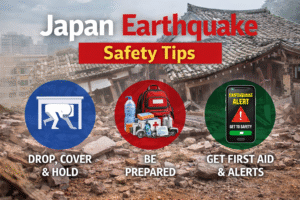
- Ignoring the Typhoon Alerts: If you are visiting in September or late August, watch the weather news. Trains stop running when a typhoon approaches. Have a backup plan and stay flexible.
-
- Wearing the Wrong Shoes: You will be doing a lot of walking, often on stone paths and tatami mats. Wear breathable, comfortable walking shoes. Avoid heavy boots or non-breathable synthetic materials.
Conclusion
Exploring the country during its hottest season is a test of endurance, but the payoff is a deep connection to the culture and landscape. The sight of massive festival floats being paraded through the streets, the taste of icy shaved ice (kakigori) after a long walk, and the sound of cicadas singing in the trees are the quintessential sounds and tastes of a Japanese summer. It offers a perspective that winter and spring travelers simply don’t see. By packing smart and timing your days correctly, you can avoid the worst of the discomfort.
Ultimately, the summer months offer a vibrant, high-energy backdrop for an unforgettable vacation. It is a time to embrace the outdoors, celebrate with locals, and discover the cooler side of the country. We highly recommend adding this season to your travel bucket list. The heat might be fierce, but the memories made during a Japan in Summer trip are worth every drop of sweat. With proper planning, your experience of japan summer travel, summer festivals japan will be a highlight of your life.
FAQs
Is it too hot to enjoy Japan in August?
It is undeniably hot and humid, similar to a sauna. However, with proper planning (indoor breaks, hydration, and using air conditioning), it is entirely manageable. Many locals still go about their daily lives, and the festival atmosphere makes it bearable.
What should I wear in summer in Japan?
Light, breathable fabrics like linen and cotton are best. Modesty is appreciated, so avoid overly revealing clothing, though T-shirts and shorts are fine. If you plan to visit temples, clothes that cover shoulders and knees are respectful. Bring a light cardigan for overly air-conditioned trains and stores.
Are there any discounts for summer travel?
Generally, summer is a peak season, so flights and hotels are expensive, especially during the Obon holiday in mid-August. However, domestic airlines sometimes offer “set” deals, and some attractions offer summer-only discounts if you pre-book.
Can I see Mount Fuji in summer?
Yes! Unlike winter, when clouds often obscure the view, summer offers the clearest skies for viewing Mount Fuji from places like Lake Kawaguchiko or the Shinkansen. However, the snow cap is largely melted by August.
Is swimming allowed at Japanese beaches?
Yes, many beaches are open from July to September. The Izu Peninsula, Shonan, and Okinawa are the most popular spots. Just be aware that currents can be strong in some areas, so swim only in designated zones with lifeguards present.