By the JapanToVisit team · Official tools checked November 9, 2026
To avoid the worst crowds in Kyoto, compare your sightseeing time on the official Kyoto Travel Congestion Forecast before you leave your hotel. Pick the same place at two different times, then check a live camera if one is available. For Arashiyama, Fushimi Inari and the Gion–Kiyomizu area, moving a single stop earlier can make the whole day easier to plan. Open Kyoto’s official crowd forecast and live cameras

Plan the whole trip with our 14-Day Japan Guide
Build your Kyoto days into a wider Tokyo–Kyoto–Osaka itinerary. Our 14-day Japan guide includes an editable planner so you can group nearby stops and rearrange them as crowd forecasts change.
Get the 14-Day Japan Guide & PlannerPaid digital product from JapanToVisit. Etsy shows the current price and purchase details.
1. Use the official Kyoto crowd forecast map
The Kyoto Travel Congestion Forecast is the city tourism tool for comparing popular sightseeing areas. Choose your date, time and expected weather, then tap the area you plan to visit. The map shows a five-point estimate from comfortable to crowded. You can open individual area pages for a closer look at time slots and available live feeds. Official map and instructions
- Select your date. Use the actual date you’ll be in Kyoto, particularly for a weekend, holiday or autumn foliage trip.
- Compare two times at the same spot. Try 9 a.m. and late morning for the bamboo grove, or compare early and late afternoon in Higashiyama. These are starting points for a comparison.
- Set the expected weather. The map can show different estimates depending on the weather you select.
- Check the live camera where available. Match the camera’s location to the street or entrance you intend to use.
The forecast can change as your visit approaches. A live camera shows only its own view, so a clear frame at one point can coexist with queues elsewhere. Treat the two tools as different checks and look again before you leave.
2. Group Arashiyama’s bamboo grove, temple and river
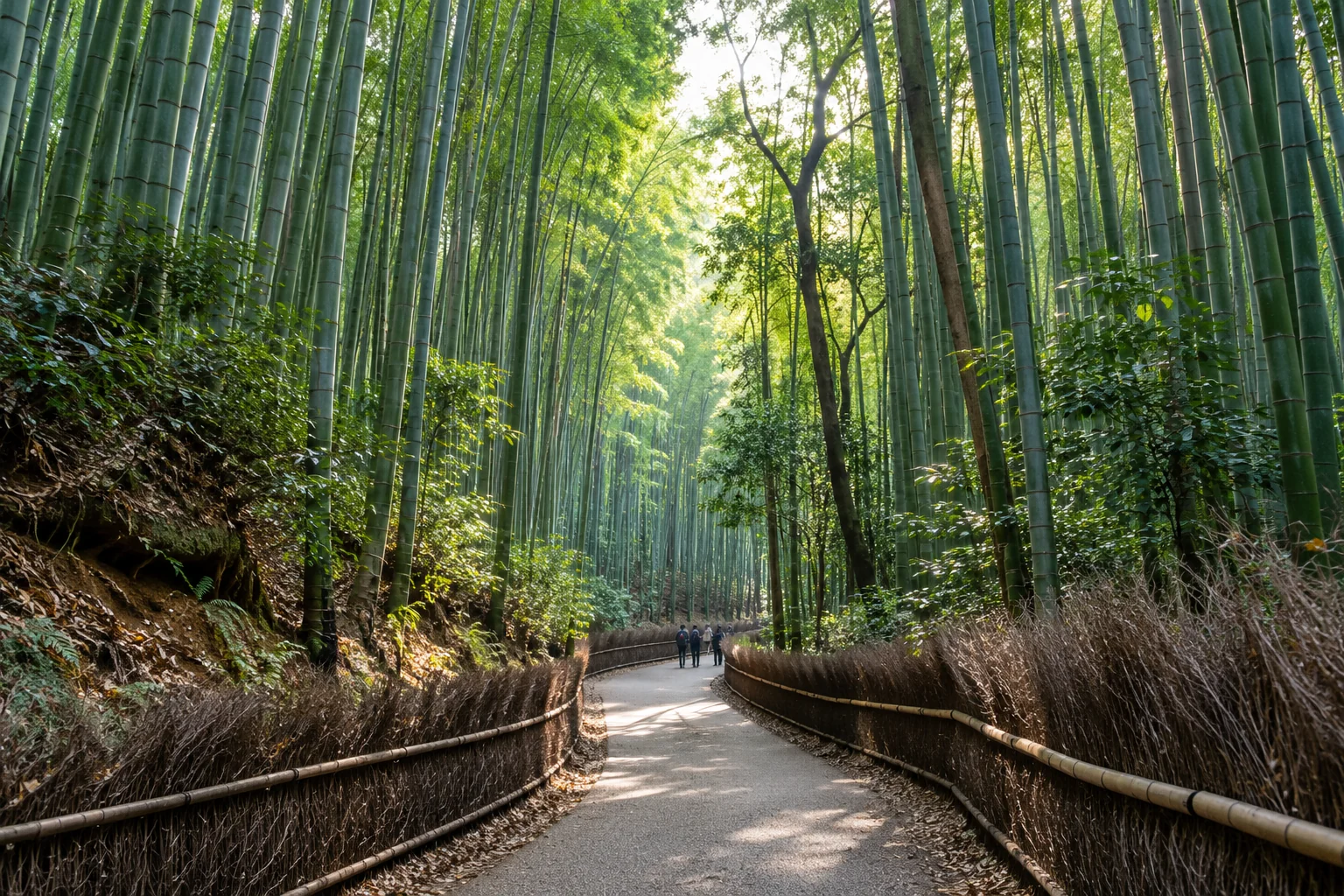
Try the bamboo grove first if the forecast shows a quieter morning slot. Continue to Tenryū-ji once it opens, then head toward Togetsukyō Bridge and the river. Keeping these stops together makes it easy to swap their order if one path is busy. If you have a garden visit or meal booked for later, build the rest of the morning around that fixed time.
From Kyoto Station, consider the JR Sagano Line to Saga-Arashiyama Station. From central Kyoto, check Kyoto Travel’s recommended access options for your starting point. Take a moment to look at the forecast for both the bamboo forest and the bridge area because they are separate places on the map. Official Arashiyama transport guide
3. Walk Gion and Kiyomizu in one block of time
For Higashiyama, compare the forecast around the Kiyomizu approach with the Gion area. If you want to see Kiyomizu-dera, Sannenzaka and Ninenzaka, start with the temple side when the time and opening hours work, then walk toward Yasaka Shrine and Gion. Leave room for uphill sections, stairs and slower walking on narrow streets. If the morning looks busier than expected, keep the same neighborhood and move one stop to later in the day.
In Gion, stick to public routes and follow posted signs, including local photography or access restrictions. Leave space for residents on narrow streets and step aside when checking a map. Kyoto’s responsible travel guidance
4. Give Fushimi Inari its own morning
From Kyoto Station, Kyoto Travel recommends the JR Nara Line for Fushimi Inari Taisha. Choose a service that stops at Inari Station. If you’re starting near Gion, the tourism office also recommends the Keihan connection from Gion-Shijō to Fushimi-Inari Station. The two station names refer to different operators, so check the name in your app before boarding. Official Fushimi Inari access guide
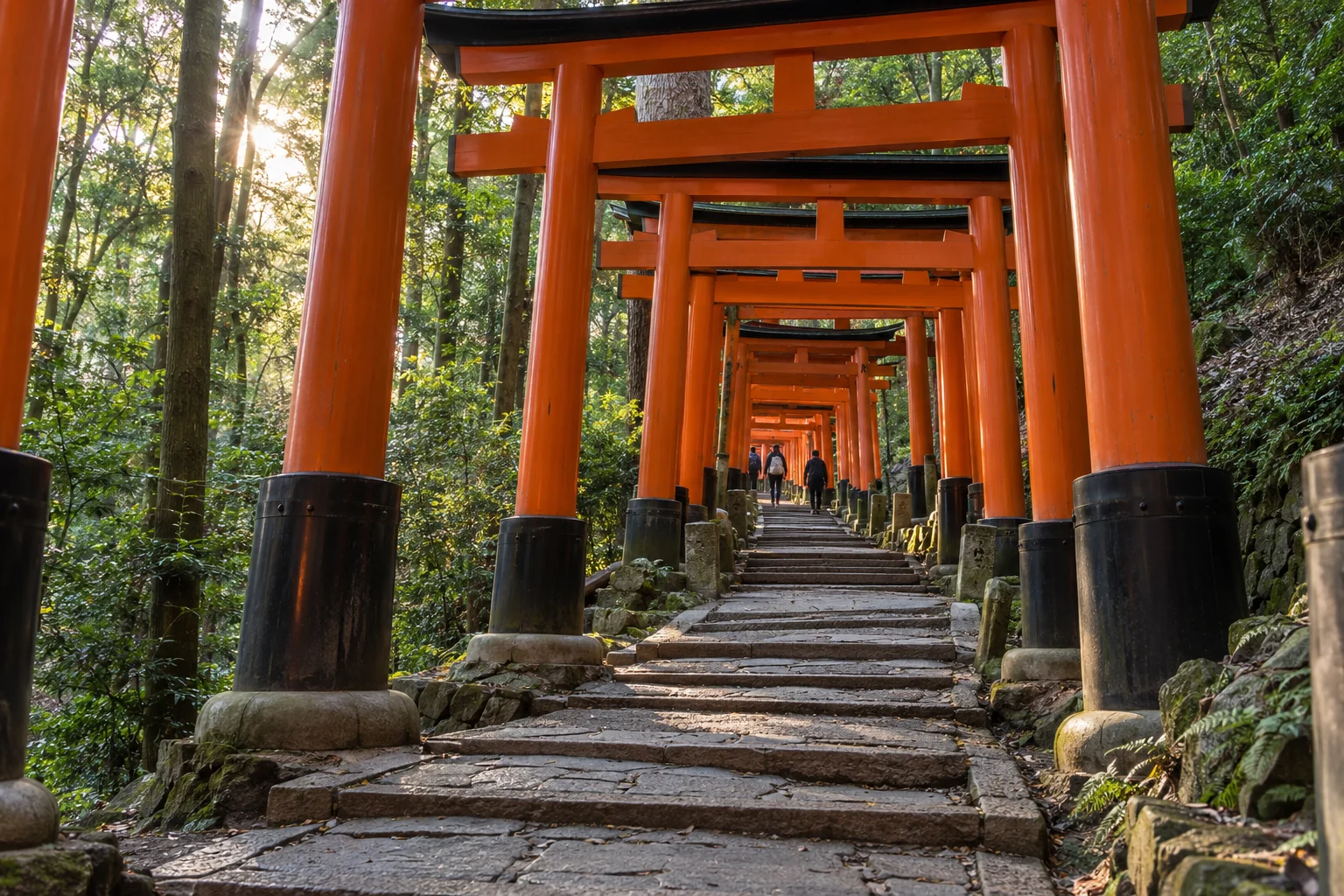
Compare an early visit with your later option on the forecast, then choose how far you want to walk. The lower torii paths are the easiest to fit into a short visit. Allow extra time if you plan to climb, and keep the path clear when you stop for a photograph.
5. Build a Kyoto itinerary around one priority per morning
Bamboo grove, Tenryū-ji and Togetsukyō Bridge. Give the area most of the morning.
Kiyomizu-dera and the historic lanes, then Yasaka Shrine and Gion.
Fushimi Inari first, with a flexible afternoon elsewhere in the city.
With two days, choose the two morning stops you care about most. Add the third only if the route, forecast and your pace make sense. For other stops to pair with each area, see our three-day Kyoto guide.
6. Frequently asked questions
What time is best to visit Kyoto’s popular sights?
Start by comparing an early slot with late morning on the official forecast for your exact date. Early is a useful option, particularly for outdoor walks, but paid gardens, temples and shops may open later.
Can I see actual Kyoto crowds before I go?
Yes, at selected spots. Use the live cameras linked from the official forecast or Kyoto Smart Navi. The forecast and camera cover specific locations, so check whether the view matches the street or attraction you plan to use. Kyoto’s official maps and tools
Should I skip Arashiyama if the forecast looks crowded?
First compare another time and check the bridge and bamboo grove separately. You might still be able to see the area comfortably by changing the order of your stops or giving it a different morning.