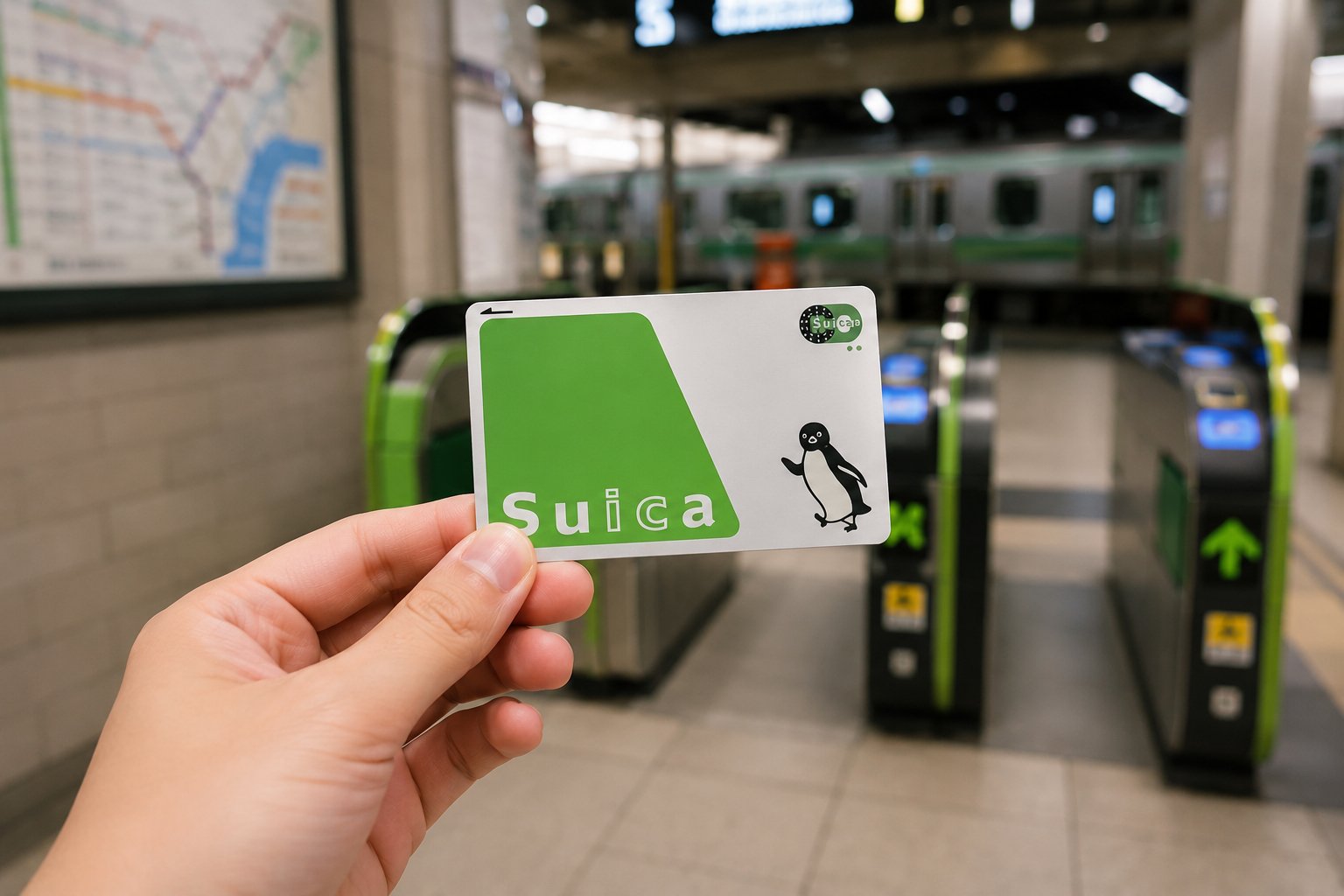
If you read one Suica card guide before landing in Japan, make it this one — because the rules changed, and half the advice online is out of date. The classic green Suica is Japan’s tap-and-go IC card: one card for every train, subway, and bus, plus convenience stores, vending machines, coin lockers, and more. No ticket machines, no fumbling with coins, no deciphering fare maps.
Here’s everything tourists need to know in 2026: which Suica you can actually buy now, where to get it, how to charge it, and the mistakes that catch first-timers.
What Is a Suica Card, Exactly?
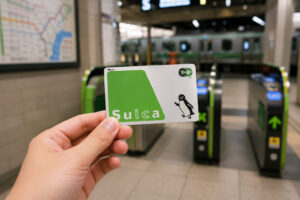
Suica is a rechargeable IC (integrated circuit) card issued by JR East. You load money onto it, then tap it on the reader at train gates, bus doors, and shop counters — the fare or price is deducted automatically. It works across essentially all of Japan’s IC network, so the card you get in Tokyo also taps you through Osaka and Kyoto.
One important thing a good Suica card guide has to make clear: Suica is a payment card, not a discount pass. You pay normal fares — the win is pure convenience (and it’s a big win).
@japantovisit / Suica card guide
1. The Big 2026 Change: Get a Welcome Suica
@japantovisit / Big 2026 Change: Get a Welcome Suica
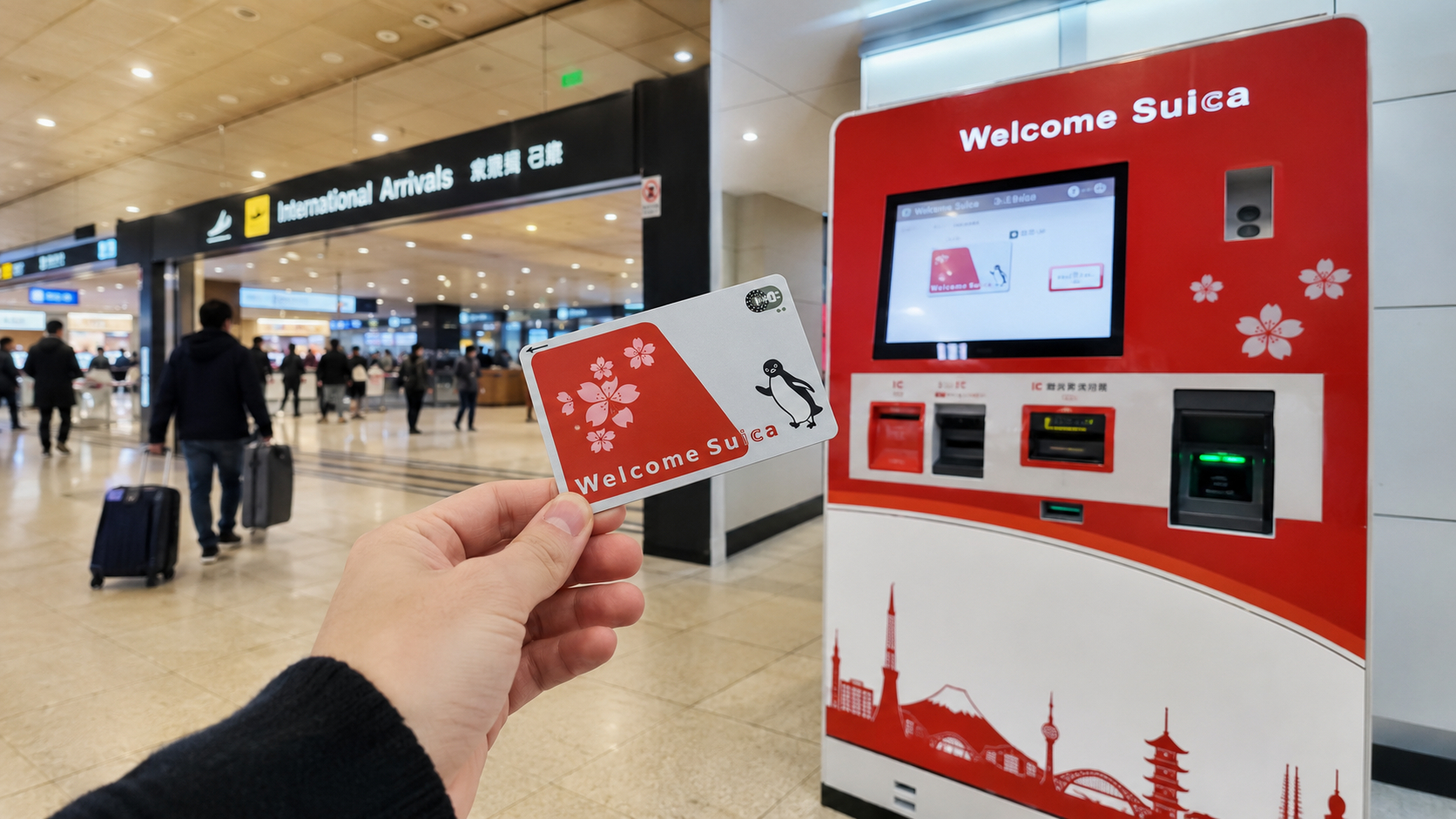
Here’s what trips up travelers following old advice: regular physical Suica cards are not reliably on sale at the airports anymore (sales were restricted during Japan’s chip shortage and tourist options changed). What you want instead is the Welcome Suica — the tourist edition:
- Sold at dedicated red vending machines in the arrival halls of Narita Terminals 1–2 (and at Haneda)
- No ¥500 deposit — every yen you load is spendable
- Valid for 28 days, then it expires
- Non-refundable — leftover balance is lost, so load small amounts and top up as you go
For most tourists on a trip under four weeks, the Welcome Suica is the answer. Full stop.
2. Even Better: Mobile Suica on Your Phone 📱
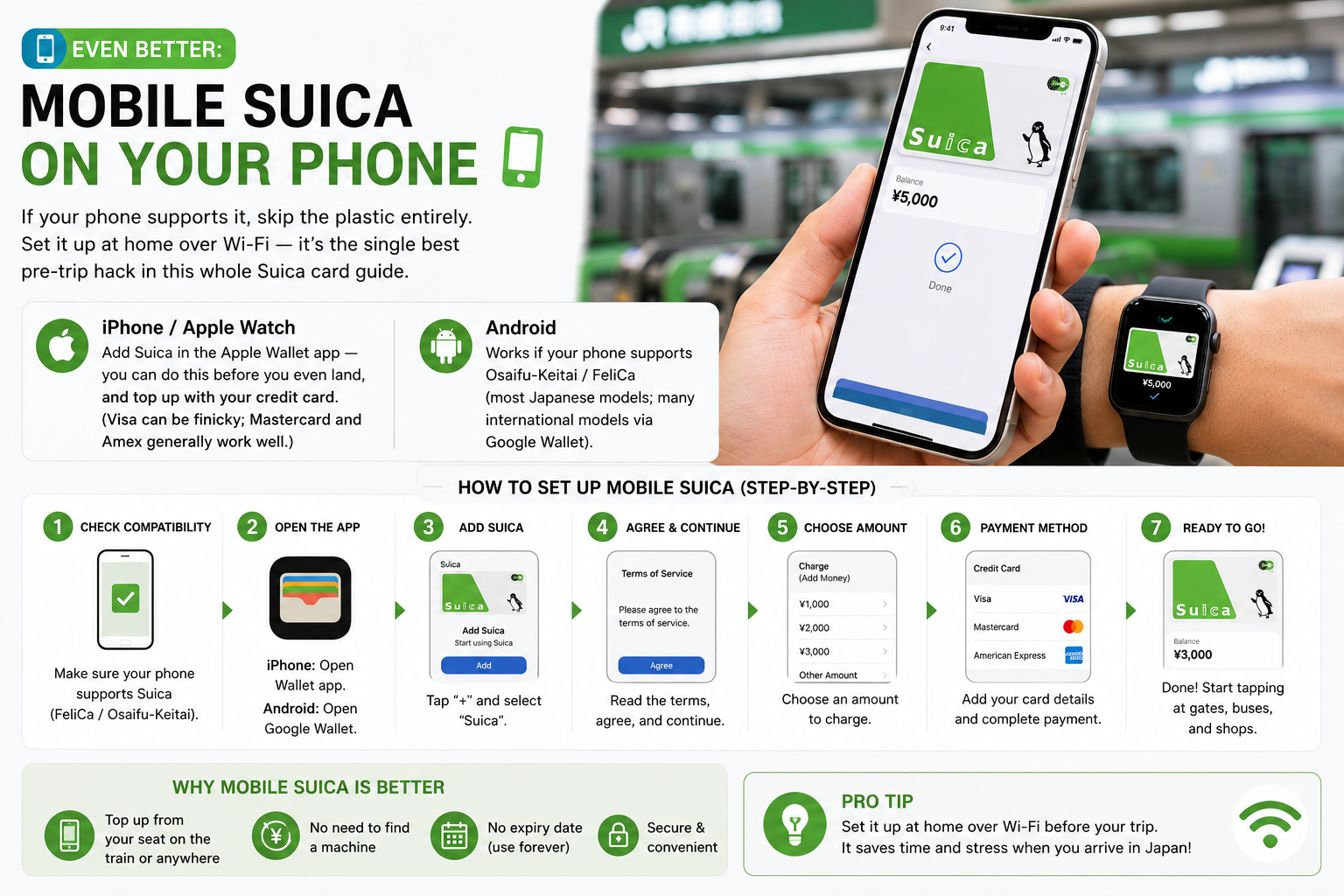
If your phone supports it, skip the plastic entirely:
- iPhone / Apple Watch: add Suica in the Apple Wallet app — you can do this before you even land, and top up with your credit card (Visa can be finicky; Mastercard and Amex generally work well)
- Android: works if your phone supports Osaifu-Keitai / FeliCa (most Japanese models; many international models via Google Wallet)
@japantovisit / Mobile Suica on Your Phone
Mobile Suica means recharging from your seat on the train instead of hunting for a machine, and no expiry-date worry. Set it up at home over Wi-Fi — it’s the single best pre-trip hack in this whole Suica card guide.
3. Where to Buy One in Person
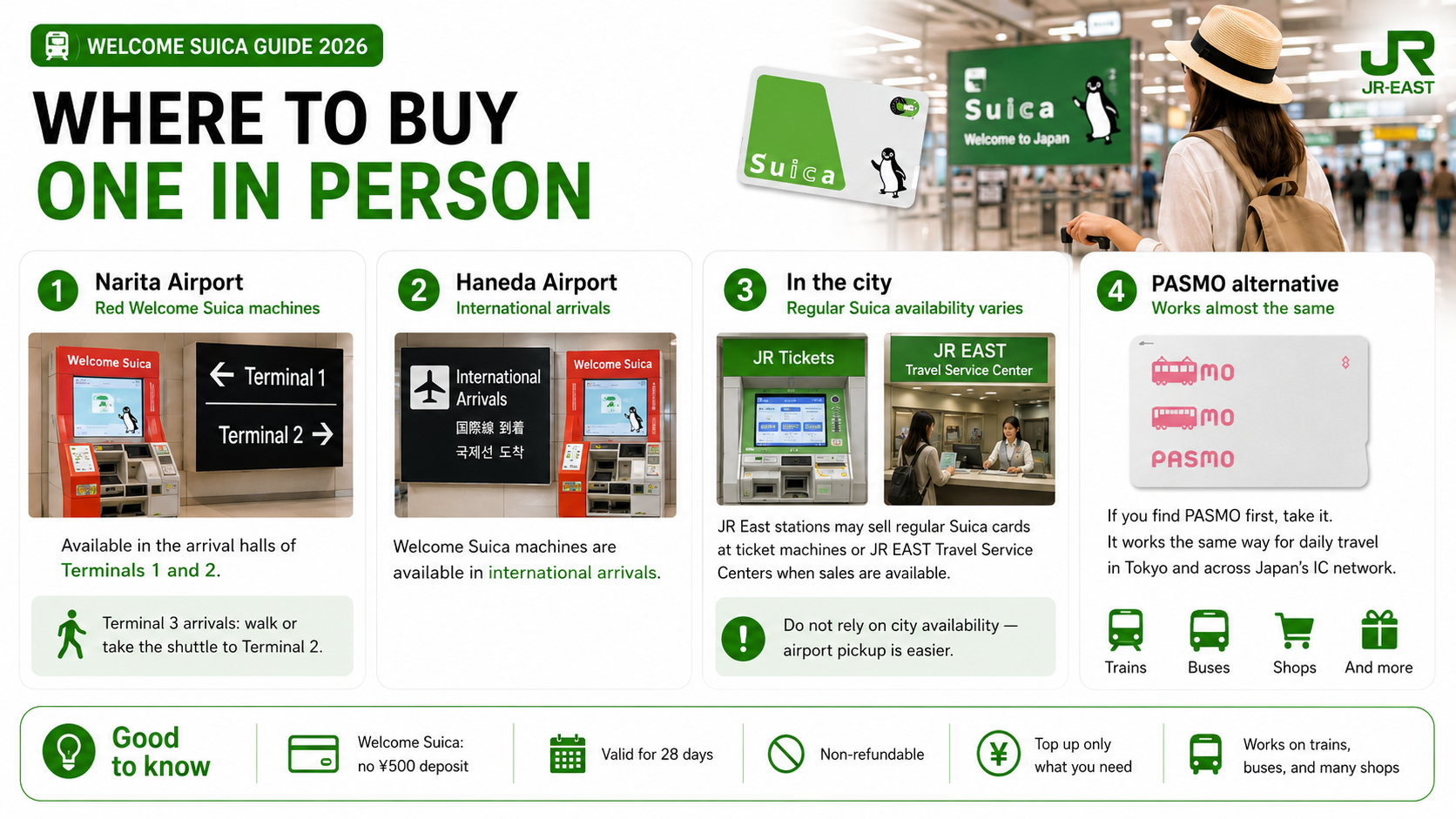
- Narita Airport: red Welcome Suica machines, arrival halls of Terminals 1–2 (Terminal 3 arrivals: shuttle or walk to Terminal 2)
- Haneda Airport: Welcome Suica machines in international arrivals
- In the city: JR East stations sell Suica at ticket machines and JR EAST Travel Service Centers when regular-card sales are available — but don’t build your plan around it; availability has been on-and-off
- Pasmo alternative: the Pasmo card (from Tokyo’s subway operators) works identically and is interchangeable in daily use — if you find one first, take it
@japantovisit / Where to Buy One in Person
4. How to Charge (Top Up) Your Suica 💴
Charging is the part nobody explains well, so here it is:
- Find a ticket machine with the IC logo (almost all of them) — tap the English button
- Insert your card (or select charge for mobile), choose an amount — ¥500 to ¥10,000 per top-up
- Pay in cash. This is the classic gotcha: station machines take yen cash only for charging physical cards. Mobile Suica users can charge by credit card in-app
- Convenience stores (7-Eleven, Lawson, FamilyMart) can also top you up at the register — just hand over the card and cash and say “charge, please”
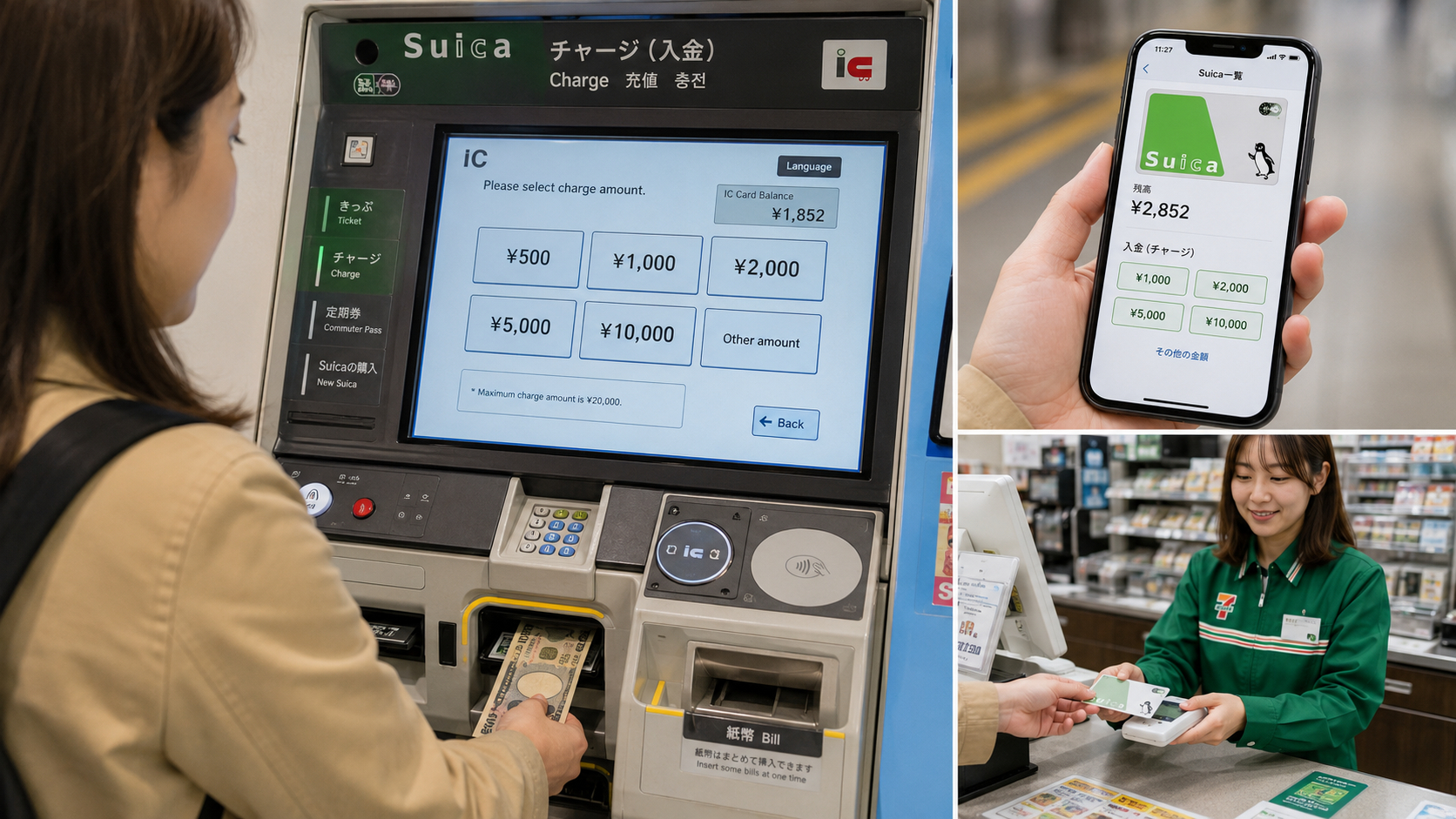
@japantovisit /How to Charge (Top Up) Your Suica
How much to load? Start with ¥2,000–3,000. A typical Tokyo metro ride costs ¥180–330, so that covers days of travel — and since the Welcome Suica is non-refundable, small-and-often beats one big load.
5. What You Can Pay for With Suica (More Than You Think)
- 🚆 All JR, metro, subway, and private railway lines across the IC network
- 🚌 City buses
- 🏪 Convenience stores — tap for onigiri, drinks, and the legendary konbini egg sandwich (want to know why everyone raves about it? Here’s a great Tamago Sando recipe and breakdown on japanDishes.com — then tap your Suica at 7-Eleven and compare)
- 🥤 Vending machines with the IC reader
- 🔒 Station coin lockers
- 🍜 Many chain restaurants, cafés, drugstores, and even some taxis
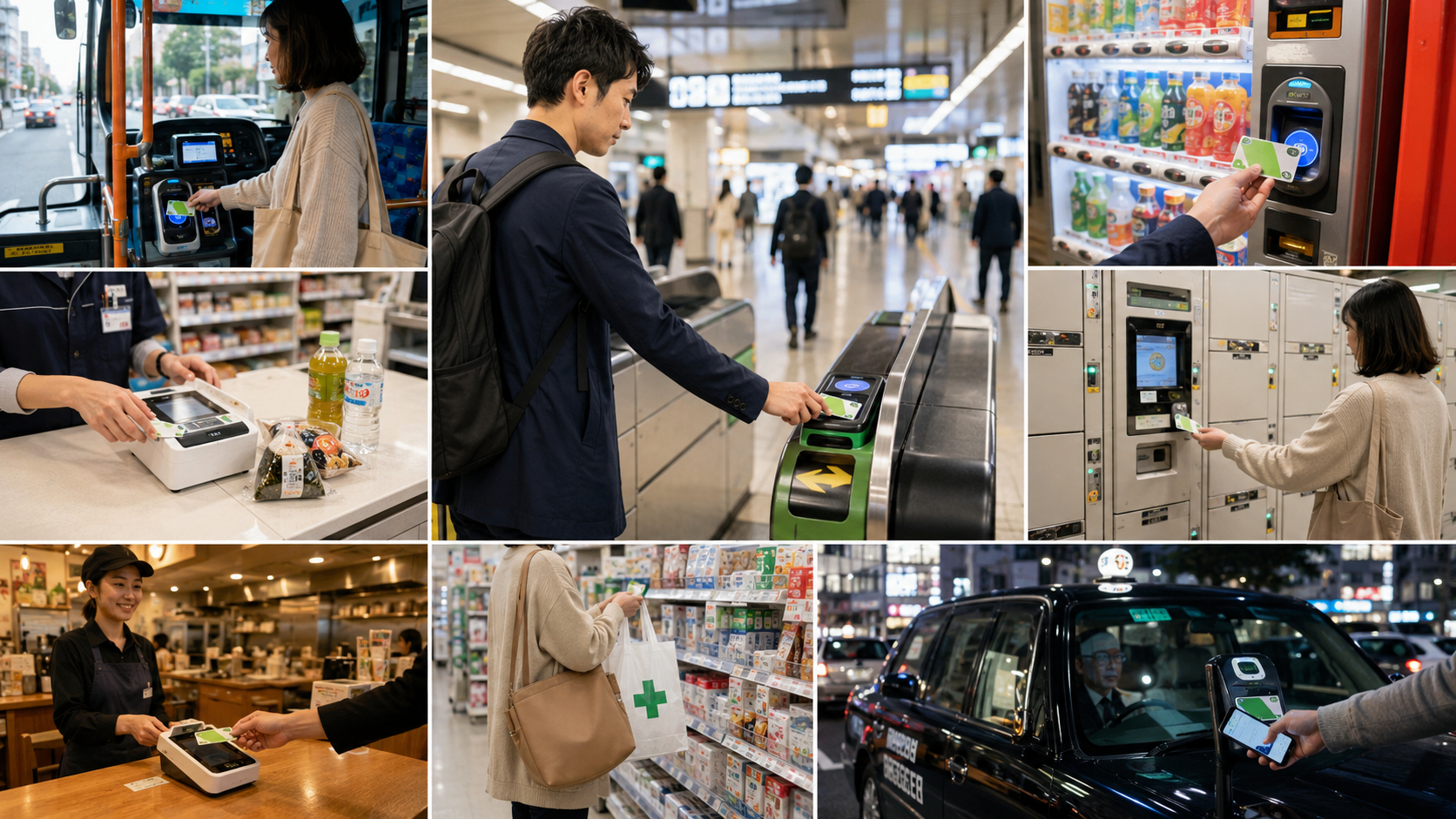
@japantovisit / What You Can Pay for With Suica
6. What Suica Can’t Do ⚠️
- Shinkansen (bullet trains): base Suica balance doesn’t cover them by default — you’ll buy separate tickets (or use special services). Budget accordingly.
- Limited express trains like the Skyliner: your Suica covers the base fare, but the liner/express ticket is separate.
- Discounts: none. If you’re doing very heavy sightseeing, compare a 24/48/72-hour subway pass for those days.
- Refunds on Welcome Suica: none — spend it down before you fly home (konbini snack run solves this problem deliciously).
7. Suica vs. Pasmo vs. ICOCA — Does It Matter?
Honestly: no. They’re issued by different companies (JR East, Tokyo metro operators, JR West) but are fully interoperable for riding and shopping nationwide. Grab whichever tourist card is easiest at your arrival point, or go mobile. This Suica card guide would just say: don’t overthink it.
Frequently Asked Questions
Where can tourists buy a Suica card in 2026? Get a Welcome Suica from the red vending machines in the arrival halls at Narita (Terminals 1–2) or Haneda — no deposit, valid 28 days. Or add Mobile Suica to your iPhone or compatible Android before you land.
How much does a Suica card cost? The Welcome Suica has no deposit — you only pay what you load (top-ups from ¥500 to ¥10,000). Regular Suica cards, when available, carry a refundable ¥500 deposit.
How do I charge a Suica card? At any ticket machine with the IC logo (cash only for physical cards, ¥500–¥10,000 per charge) or at convenience-store registers. Mobile Suica charges by credit card in-app.
Does Suica work in Osaka and Kyoto? Yes — Suica works across Japan’s shared IC network, including Osaka, Kyoto, and most major cities.
Can I use Suica on the Shinkansen? Not with the basic balance — bullet trains need separate tickets. Suica covers regular trains, subways, and buses.
What happens to leftover money on a Welcome Suica? It’s non-refundable and the card expires after 28 days — so load small amounts and spend the remainder at a konbini before departure.
Tap In and Go
That’s the full Suica card guide: grab a Welcome Suica at the red machine (or set up Mobile Suica before you fly), load ¥2,000–3,000 in cash, and tap your way through Japan — trains, buses, lockers, and every egg sandwich in sight.
Keep planning on japantovisit.com:





2 thoughts on “Suica Card Guide 2026: 7 Essential Things Tourists Must Know”