Updated September 2026 · Check current access and opening details before your visit
Kyoto is a city to explore on foot, one district at a time. A shrine path can lead into a hillside walk; a temple visit can become an afternoon among old streets, gardens and small food shops. This guide to the best things to do in Kyoto in 2026 brings together 20 worthwhile experiences and shows you how to enjoy them without spending the whole trip in transit.
For a first visit, give Kyoto at least three full days. Put Fushimi Inari and the eastern hills on one day, Arashiyama on another, then choose between northern temples and a slower central or northeastern Kyoto day. The city rewards a little space in your plans.
Quick answer: Start with Fushimi Inari, Kiyomizu-dera and a respectful walk through Higashiyama and Gion. Add Arashiyama’s bamboo, Tenryu-ji and riverfront on another day. For your third, choose Kinkaku-ji and Ryoan-ji, or the Philosopher’s Path and Nanzen-ji. Check Kyoto’s official congestion forecast before setting the order.
Choose your Kyoto day
The landmarks look close on a map, but hills, busy streets and bus rides add time. These routes group places that belong together. Pick one main area for each half-day and leave room for a tea break.
Fushimi Inari → Kiyomizu-dera → Higashiyama lanes → Gion. An ambitious full day.
Arashiyama bamboo → Tenryu-ji → Togetsu-kyo → quieter Sagano streets.
Kinkaku-ji → Ryoan-ji → Nishiki Market or Nijo Castle. Use transit between areas.
Ginkaku-ji → Philosopher’s Path → Nanzen-ji. Better as a slow half-day.
Fushimi: torii paths and canal history
Two experiences in southern Kyoto
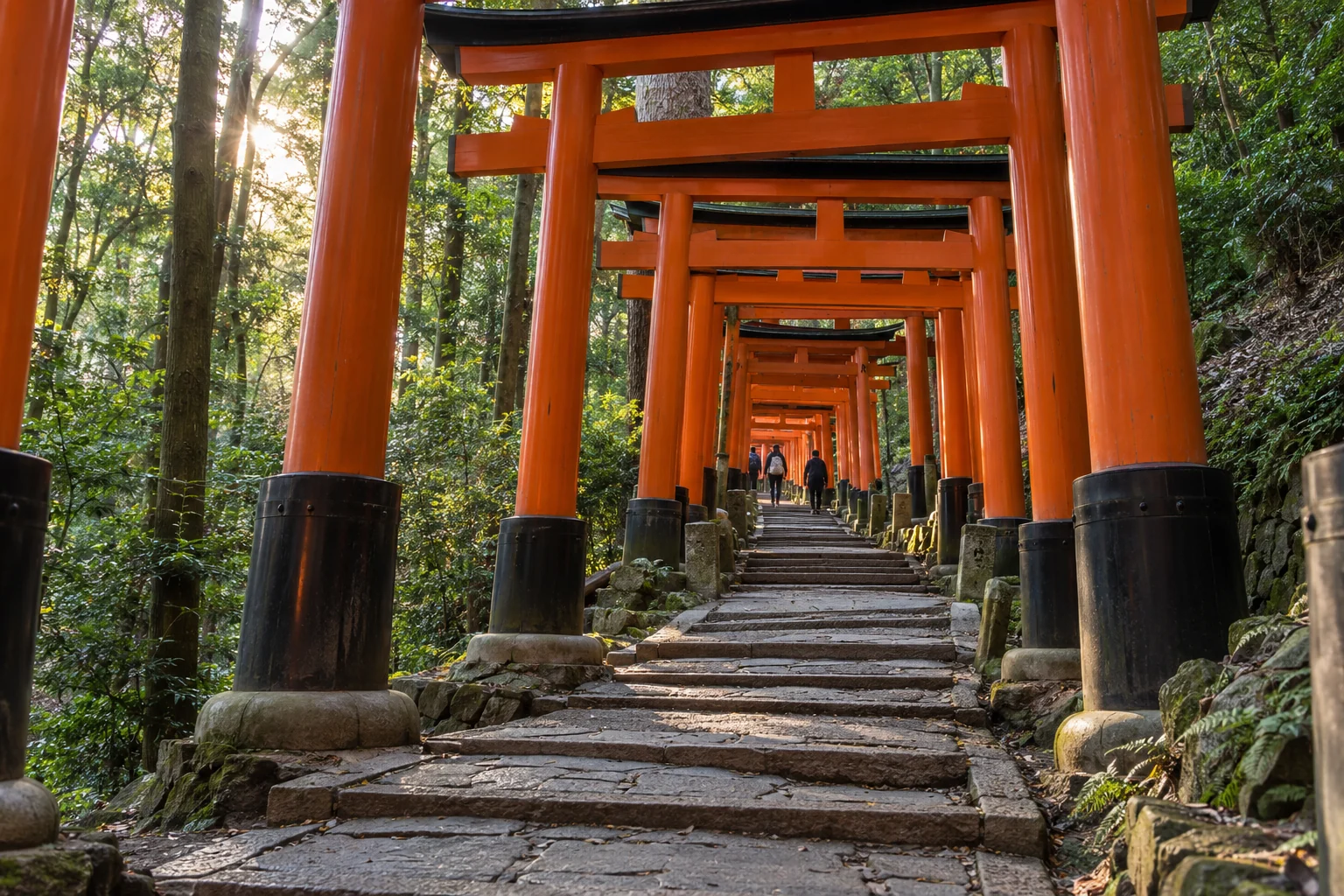
1. Walk beneath the torii gates at Fushimi Inari
The vermilion gates are only the beginning. Follow the route uphill and the crowd usually thins as the shrine paths climb into the trees. You can make this a short visit to the lower gates or a longer hike around Mount Inari; wear shoes that handle steps and uneven paths. It is an active place of worship, so leave the middle of a path clear for others and follow shrine signs.
Allow: 1½–3 hours, more for a fuller hike · Access: JR Inari or Keihan Fushimi-Inari Station
See the shrine’s official information and Kyoto City’s access guide.
2. Continue to Fushimi’s sake and canal district
Fushimi is more than its famous shrine. Farther south, old brewery buildings, waterways and shopping streets tell the story of a river-port district. If you enjoy sake, choose a brewery or museum with visitor hours that suit your day; tastings are for adults and are optional. Seasonal canal boat operations and reservations change, so verify them before making the cruise the center of your plan.
Allow: 2–3 hours · Best for: a slower afternoon after the shrine
Kyoto’s official Fushimi itinerary is a useful route reference.
Higashiyama and Gion: temples and old streets
Five stops that work together
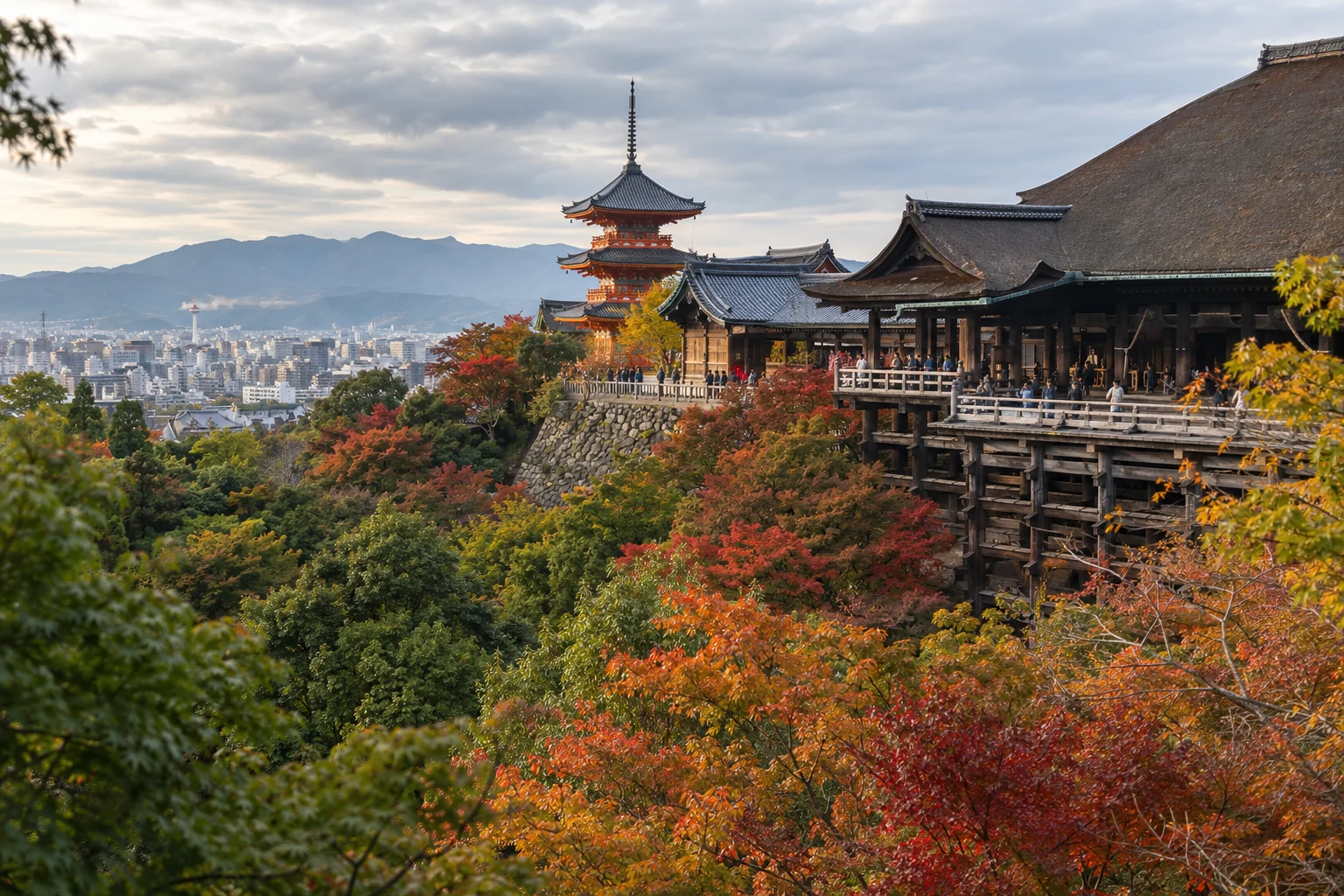
3. See the hillside setting of Kiyomizu-dera
Kiyomizu-dera’s wooden veranda opens toward Kyoto and the surrounding hills. Give yourself time for the temple grounds, then descend through the neighborhood rather than rushing straight to the next bus. Temple admission and opening times can vary for special visits; check the official temple site before going. The approach can become very busy, especially in peak foliage and blossom seasons.
Allow: 1½–2 hours at the temple plus the approach · Best sequence: temple first, neighborhood walk after
4. Walk Ninenzaka, Sannenzaka and the Yasaka Pagoda area
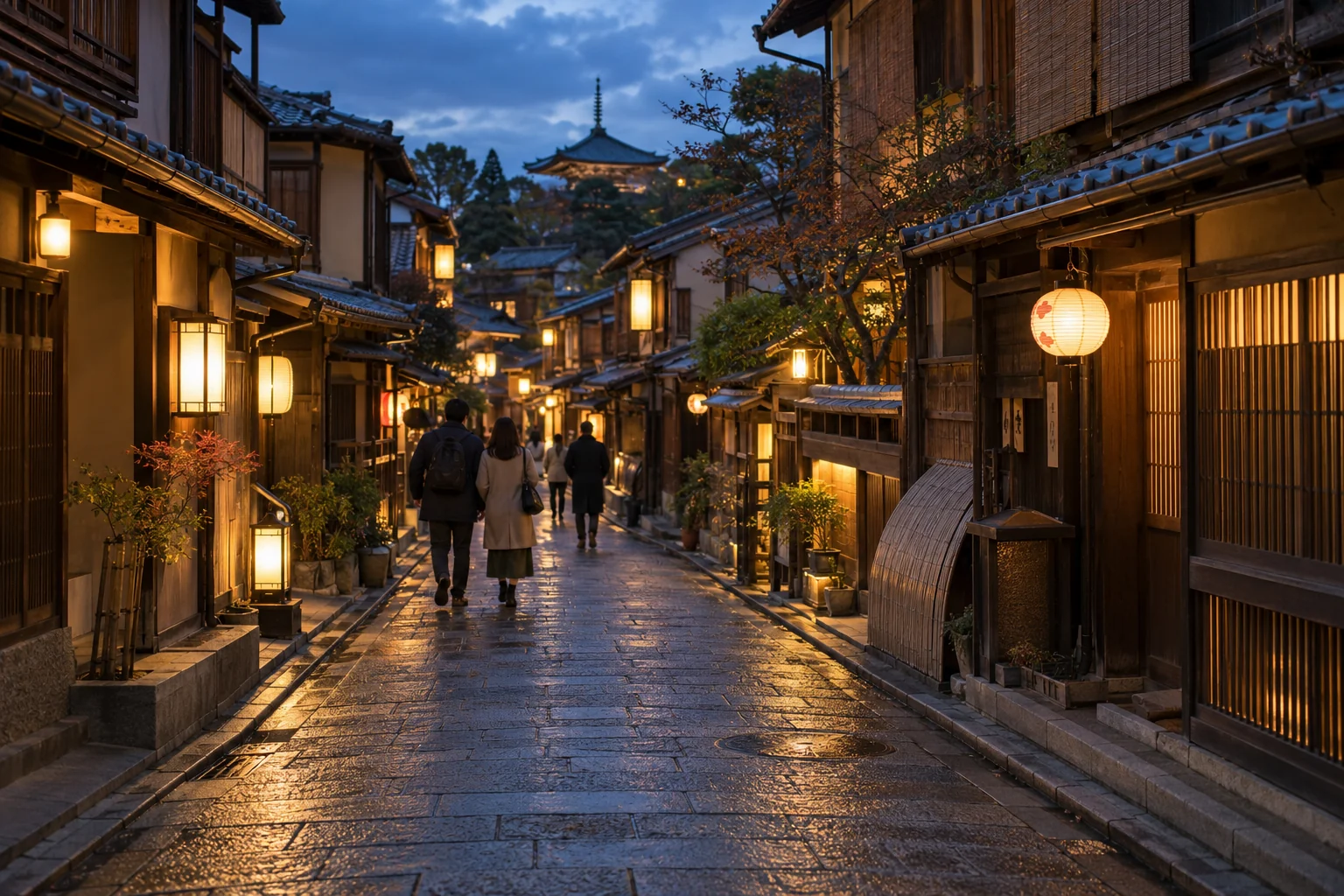
These lanes are best enjoyed as a walk between places, not a photo stop to tick off. Look up at the old rooflines, browse a small shop and step aside before checking a map. Hokan-ji’s pagoda is a landmark of this area, but the lanes include homes and working businesses. Go early for a calmer walk, or return in the evening when many shops have closed and the mood shifts.
Allow: 1–2 hours · Pair with: Kiyomizu-dera and Yasaka Shrine
Read Kyoto City’s Higashiyama walking route for a practical sequence.
5. Explore Gion respectfully and stop at Yasaka Shrine
Gion has restaurants, theaters, shrines and streets where people live and work. Walk public streets quietly and obey posted access and photography rules. Do not stop, follow, touch or photograph geiko and maiko without permission. If a performance interests you, book an appropriate cultural venue instead of treating someone’s journey to work as an attraction. Yasaka Shrine provides a natural stop on a Higashiyama walk.
Allow: 1–2 hours, longer with dinner or a performance · Best for: an evening stroll
Kyoto City’s 2026 visitor guidelines explain the local rules clearly.
6. Make an evening of the Kamo River and Pontocho
The riverside gives you a simple, no-ticket pause after temple visits. Walk along the Kamo River, then choose a restaurant in or near Pontocho if its menu and price suit you. This narrow dining lane can feel crowded at peak dinner time. A reservation helps at a specific restaurant; you do not need one to enjoy the river walk.
Allow: 1–2 hours plus dinner · Best for: a relaxed finish to a sightseeing day
7. Visit Sanjusangen-do for its Buddhist sculpture
Sanjusangen-do is a strong choice when you want an indoor visit with real depth. Its long hall and rows of Kannon statues are unlike the quick exterior view of another temple. Check the photography rules before entering; restrictions apply inside. The temple is useful near the Kyoto Station and eastern Kyoto routes, but give it its own hour instead of rushing through.
Allow: about 1 hour · Pair with: Fushimi Inari or eastern Kyoto
See the official city destination page.
Arashiyama and Sagano: bamboo and gardens
Four reasons to spend more than one hour here
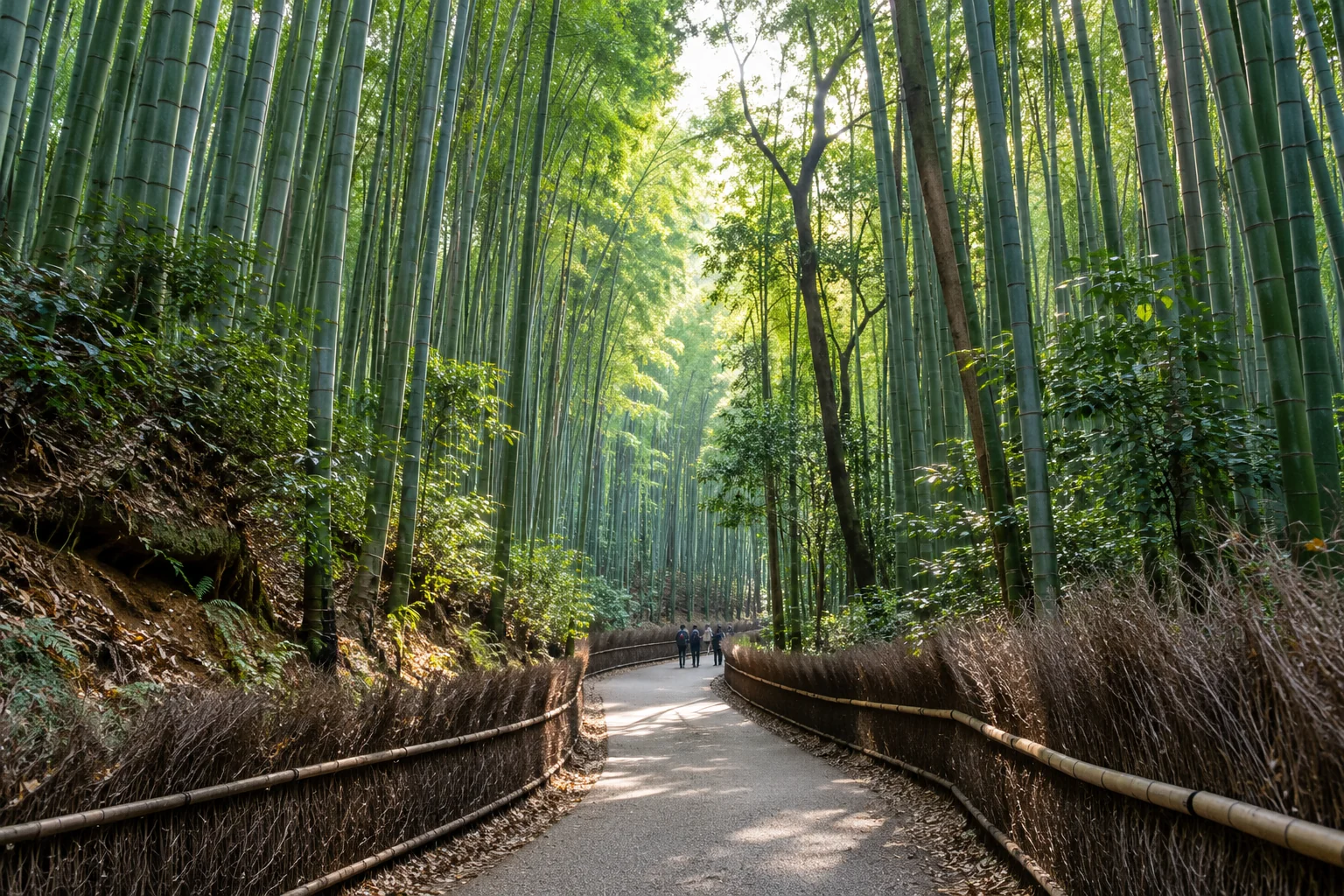
8. Walk the Arashiyama Bamboo Grove
The bamboo path is striking, but it is also popular. Visit early if a quieter experience matters, then keep walking into the surrounding Sagano area. The path itself is a short section of a larger neighborhood; making it your only western Kyoto stop misses the gardens and river nearby. Stay on the path and never mark the bamboo.
Allow: 30–60 minutes for the grove · Pair with: Tenryu-ji and the river
9. Spend time in Tenryu-ji’s garden
Tenryu-ji’s landscaped pond and mountain backdrop make a good counterpoint to the bustle of the bamboo path. Slow down around the garden rather than trying to collect as many temple photos as possible. Garden and building access can be ticketed separately, and some areas may close or vary by season. Verify what is open on the official temple site.
Allow: 1–1½ hours · Best for: a garden-focused visit
10. Cross Togetsu-kyo and enjoy the riverfront
Togetsu-kyo Bridge and the Katsura River add open sky after the enclosed bamboo path. Walk across, then find a quieter place along the banks to appreciate the mountain setting. Food and boat options depend on the season and weather. The official bridge guide gives context for the landmark.
Allow: 45–90 minutes · Best for: a low-cost break and landscape views
11. Go farther into Sagano or visit Otagi Nenbutsu-ji
If you have a full western Kyoto day, continue beyond the busiest core. Sagano’s lanes, small temples and rural edges invite a gentler pace. Otagi Nenbutsu-ji is one possible destination, known for its expressive stone figures, but it takes extra travel or walking. Check admission, access and your return route before setting off. Do not squeeze this into a short Arashiyama visit.
Allow: 2–3 extra hours · Best for: a second-visit or full-day plan
Northern Kyoto: gold and Zen
Two temples to see as a pair
12. See Kinkaku-ji’s reflection
Kinkaku-ji’s gold-covered pavilion is reflected in a landscaped pond, making the first view memorable even on a busy day. The visit follows a set route and can be shorter than you expect; save time for the garden beyond the main viewpoint. The area is away from a train station, so plan the final bus or taxi segment. Kyoto City’s access advice recommends a subway-and-bus combination from Kyoto Station.
Allow: 1–1½ hours on site, plus travel · Pair with: Ryoan-ji
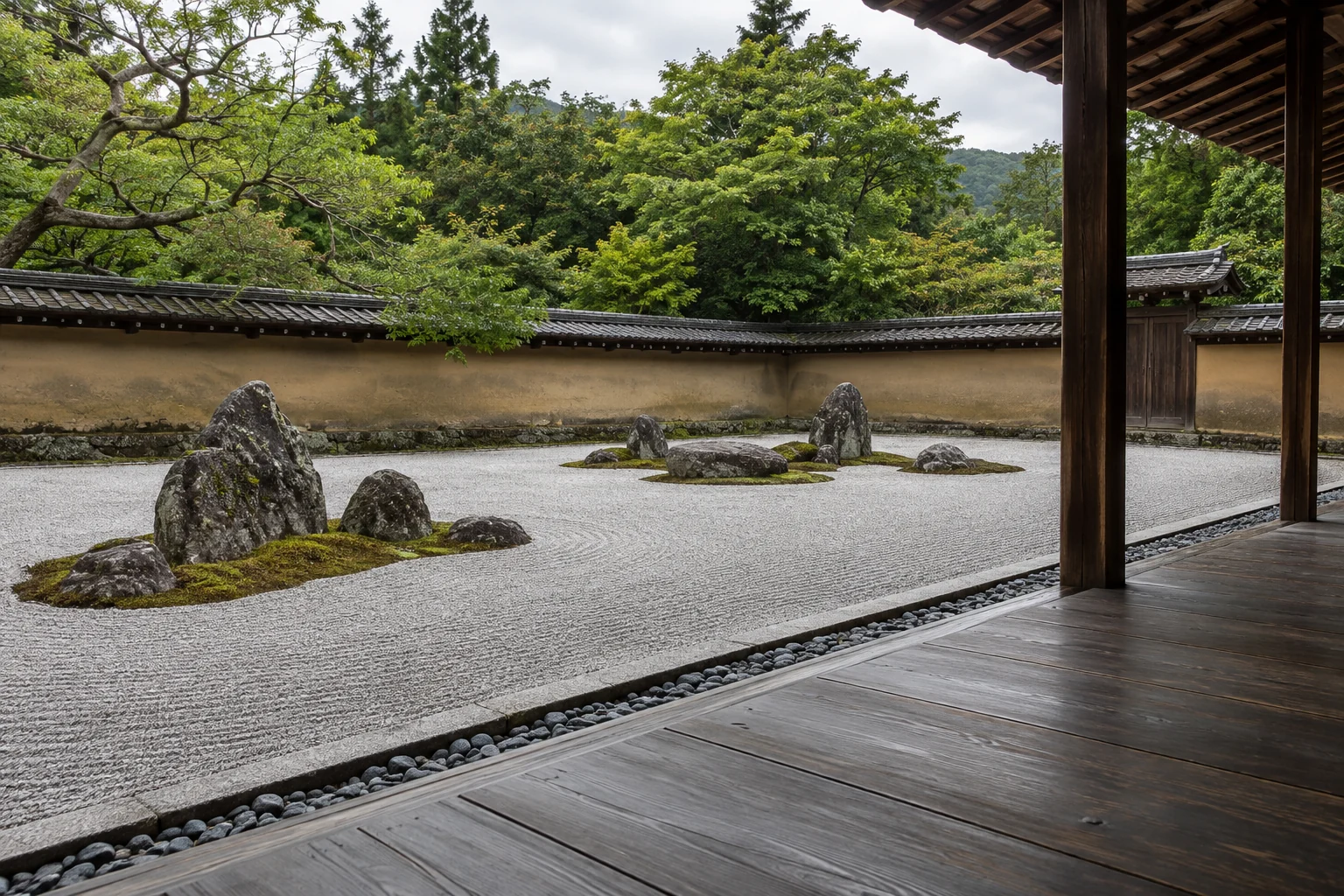
13. Sit with the rock garden at Ryoan-ji
Ryoan-ji asks for a slower kind of attention. Its raked gravel and stone arrangement is best experienced from the veranda, then a walk around the wider grounds. Choose this after Kinkaku-ji if you want a different perspective on Kyoto’s temple culture, not another version of the same picture. Keep voices low in the viewing area.
Allow: 1–1½ hours · Best for: garden design and a quieter pause
Read the Kyoto City guide to Ryoan-ji before visiting.
Central Kyoto: food, castles and palace grounds
Four flexible city stops
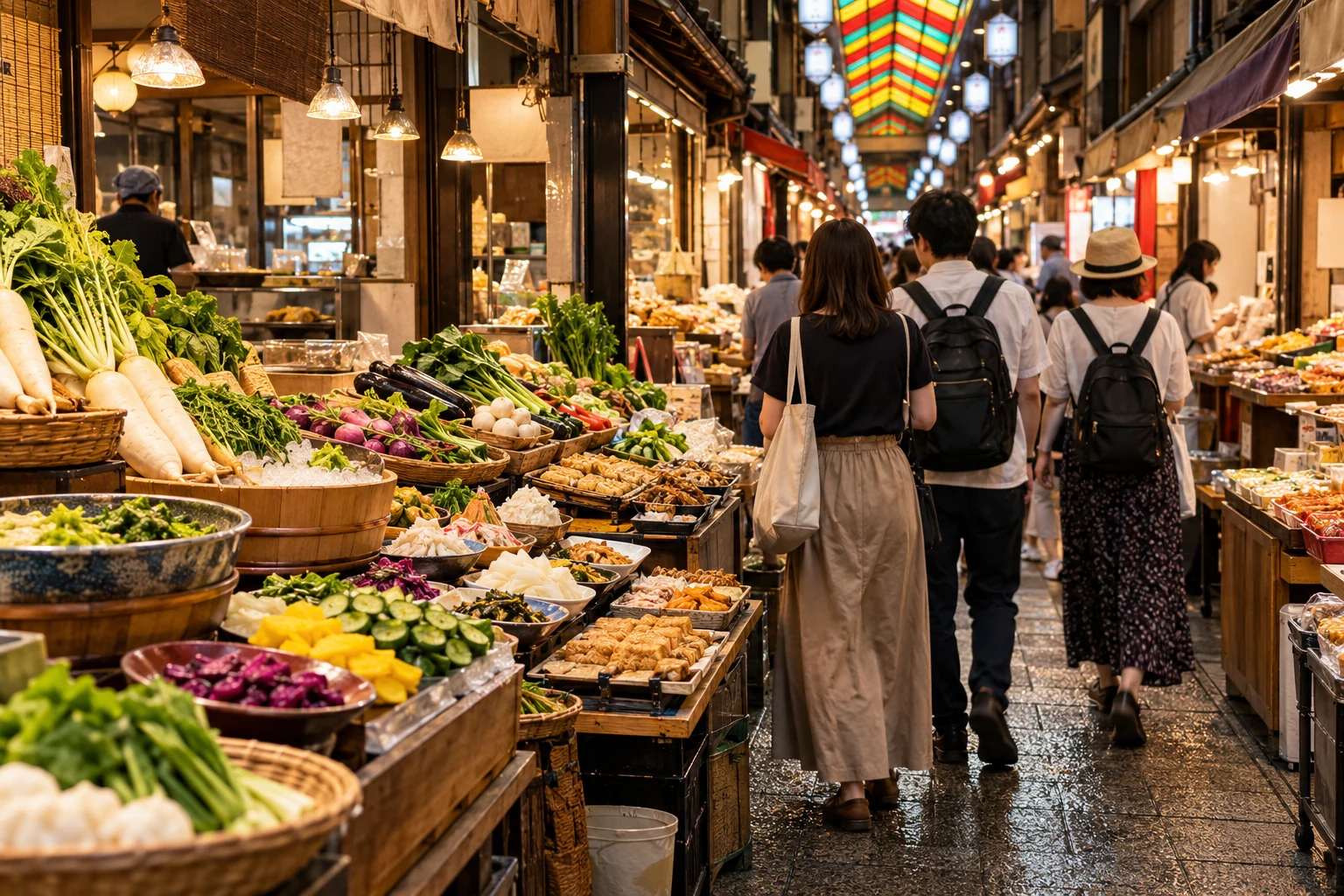
14. Taste your way through Nishiki Market
Nishiki is a working shopping street as well as a place to sample Kyoto food. Choose a few specialties, buy from the vendors who prepare them and follow each shop’s directions on where to eat. The lane is narrow: avoid blocking it for photos or eating while walking. Individual shops keep their own hours, so this is better as a late morning or lunchtime stop than a guaranteed evening meal.
Allow: 1–2 hours · Best for: snacks, food gifts and a rainy-day option
Use the official Nishiki Market overview for orientation.
15. Explore the grounds and palace at Nijo Castle
Nijo Castle adds political history to an itinerary otherwise dominated by temples. Walk the gardens and, when open, the Ninomaru Palace for its painted rooms and distinctive floors. Different areas may have separate access rules or closures, and photography can be restricted inside. Check the official castle site before you go.
Allow: 1½–2½ hours · Best for: architecture and history
16. Walk Kyoto Gyoen and the Imperial Palace area
Kyoto Gyoen National Garden is a spacious break from the shopping streets. The Kyoto Imperial Palace sits within it and recalls the centuries when this city was Japan’s capital. The palace is listed by Kyoto City as open to visitors without prior registration, but closures and entry procedures may change, so check current information. The wider garden is worthwhile even if your palace timing does not work.
Allow: 1–2 hours for the grounds, longer with palace access · Best for: an easy walking break
See the official palace guide.
17. Visit To-ji near Kyoto Station
To-ji’s five-story pagoda is a Kyoto landmark and a sensible stop if your hotel or train route takes you through the station area. The temple grounds also hold significant Buddhist halls. On the 21st of each month, the Kobo-san market usually brings a different energy to the site; check the current calendar before planning around it. Access to halls and special openings may be ticketed.
Allow: 1–2 hours · Best for: a first or last day near Kyoto Station
Kyoto City’s To-ji page explains the temple and market tradition.
Northeastern Kyoto: canal path and temples
Three stops for a calmer half-day
18. Begin with Ginkaku-ji’s gardens
Ginkaku-ji is a garden visit as much as a pavilion visit. Follow the paths past carefully arranged sand and planting, then take in the view from higher on the grounds. Despite the “Silver Pavilion” nickname, do not expect a building covered in silver. It pairs naturally with the Philosopher’s Path rather than the distant Kinkaku-ji on the same short outing.
Allow: 1–1½ hours · Pair with: Philosopher’s Path
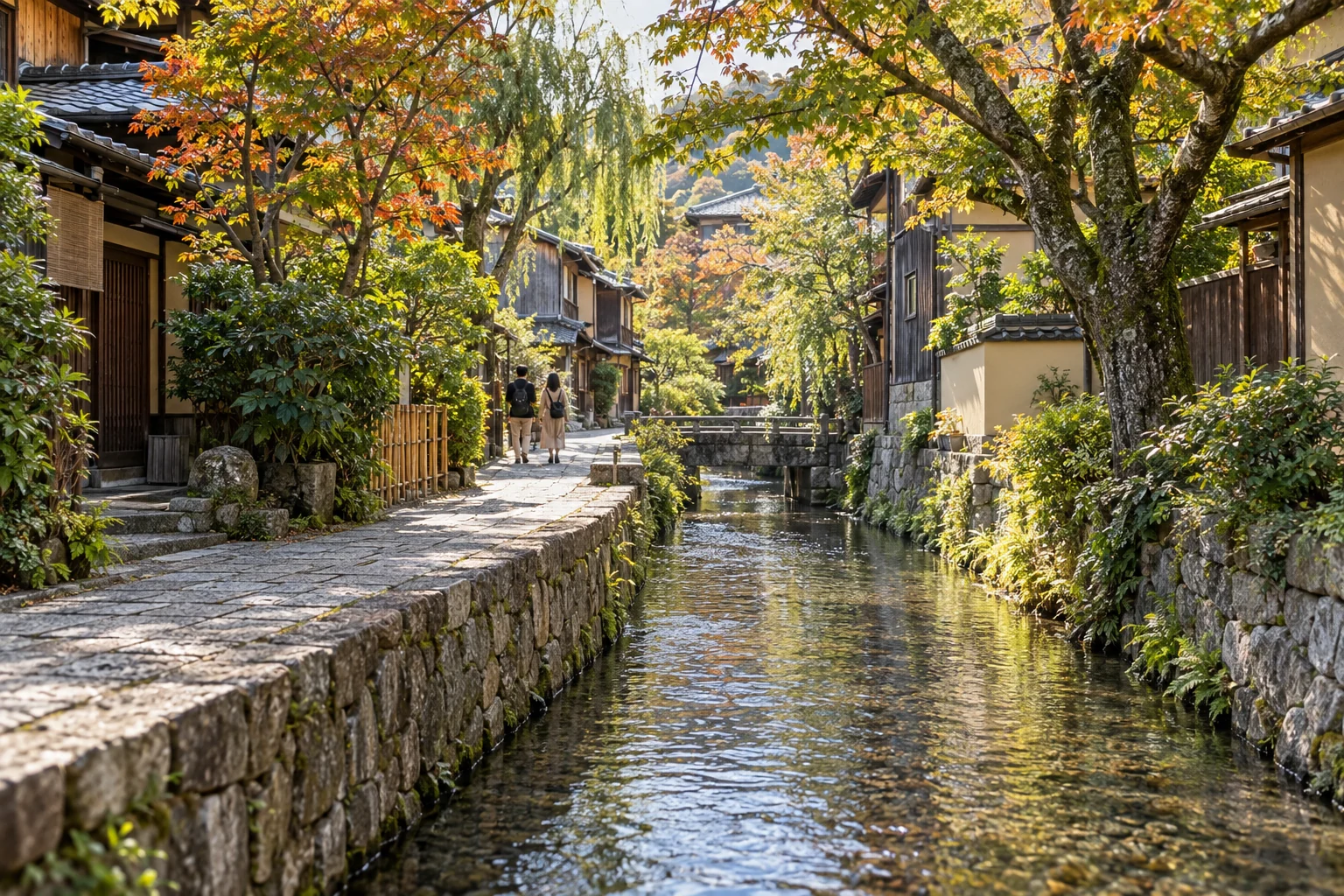
19. Follow the Philosopher’s Path
This canalside walk is lovely when you let it be a walk. Spring blossoms and autumn color are draws, but the path can also offer a welcome pause between temples in other seasons. Small shrines and cafés provide reasons to slow down. Do not assume every shop will be open, and give residents and cyclists space on the path.
Allow: 1–2 hours at an easy pace · Best for: an unhurried eastern Kyoto day
20. Finish among Nanzen-ji’s gates and gardens
Nanzen-ji’s large gate, temple buildings, gardens and historic aqueduct reward a longer look. Some grounds can be walked without a ticket while particular interiors and gardens require admission. Check individual areas and their hours on the official city guide. It is a natural end to the Ginkaku-ji and Philosopher’s Path route.
Allow: 1½–2 hours · Best for: Zen architecture and autumn color
A realistic three-day Kyoto itinerary
These are routes, not a race to see all 20 places. Opening days, weather and the city’s congestion forecast should guide the final order.
Day 1 · Fushimi and the eastern hills
Early morning: Fushimi Inari, with enough time for a partial uphill walk. Midday: move toward Kiyomizu-dera; choose Sanjusangen-do only if you want an indoor history stop. Afternoon: descend through Higashiyama’s lanes. Evening: Yasaka Shrine, Gion and dinner near the Kamo River. Save Fushimi’s sake district for a separate afternoon if you prefer a slower day.
Day 2 · Arashiyama and Sagano
Morning: bamboo grove and Tenryu-ji. Midday: lunch and the Togetsu-kyo riverfront. Afternoon: linger in Sagano, or choose Otagi Nenbutsu-ji if your route and energy allow. Return to the center for an unhurried dinner. Kinkaku-ji is possible with an early start, but it makes this day much fuller.
Day 3 · Pick the Kyoto you want more of
Gardens and history: Kinkaku-ji → Ryoan-ji → Nijo Castle or Nishiki Market. Quiet east: Ginkaku-ji → Philosopher’s Path → Nanzen-ji, then a relaxed evening downtown. Choose one branch; combining both means too much cross-city travel.
Have a fourth day? Add Fushimi’s canals, To-ji and Kyoto Gyoen, or repeat a favorite neighborhood at a different time. Our Kyoto destination page and two-week Japan itinerary can help connect this stop with the rest of your trip.
Transport, tickets, seasons and etiquette
Use rail where it helps, then walk
From Kyoto Station, JR rail is convenient for Fushimi Inari and Saga-Arashiyama. Subway and railway lines can shorten trips across the center, while buses fill gaps near temple areas. Kyoto City advises combining trains and buses instead of relying on a direct bus for every landmark. Check the official getting-around guide for current routes, passes and the 2026 transport updates. A pass only saves money if it fits your actual rides.
What should you reserve?
Most of the walking routes need no reservation, but paid temples have individual admission rules and some special openings sell limited tickets. Reserve a specific cultural performance, tour or popular restaurant if it matters to your trip. Verify temple hours, last entry and any seasonal illumination directly with the operator before you travel; a general guide cannot guarantee access on every 2026 date.
When is the best time to visit Kyoto in 2026?
Spring blossoms and autumn foliage are beautiful and busy. Summer is hot and humid, so start early and plan an indoor pause. Winter can feel calmer, though some gardens and special visits follow shorter hours. Exact flowering and foliage dates change with the weather; for later-year travel, our 2026 autumn leaves guide offers a broader seasonal overview.
Respect the city people live in
Stay on public paths, keep luggage out of crowded lanes, avoid blocking streets for photographs and follow signs at temples and private property. In Gion, never pursue or photograph working geiko or maiko without permission. In Arashiyama, never damage or mark bamboo. Kyoto’s official visitor guidance is worth reading before your trip.
Practical rhythm: Plan one major sight and one nearby neighborhood for each half-day. Keep comfortable shoes, water and a flexible indoor option. Kyoto becomes more memorable when you have time to notice the streets between landmarks.
Frequently asked questions
How many days do you need in Kyoto?
Three full days are a useful first visit: one for Fushimi and Higashiyama, one for Arashiyama, and one for the northern or northeastern temples. Four or five days let you travel more slowly and visit smaller neighborhoods.
What are the best free things to do in Kyoto?
Walk the public paths at Fushimi Inari, enjoy Kyoto Gyoen, stroll by the Kamo River and cross Togetsu-kyo. Temple buildings, gardens, performances and special openings may charge admission even when the surrounding walk is free.
Can you visit Gion in 2026?
Yes, Gion remains a living district with public streets, shops and restaurants. Respect private access restrictions and posted photography rules, and do not stop or photograph geiko or maiko without permission.
Should you see Arashiyama and Fushimi Inari on the same day?
It is possible but usually means crossing much of Kyoto and rushing both areas. If you have three days, give Arashiyama its own half or full day and pair Fushimi Inari with eastern Kyoto.
Is Kyoto still worth visiting when it rains?
Yes. Sanjusangen-do, Nijo Castle’s open palace areas, Nishiki Market and cafés can anchor a wet day. Bring suitable shoes for slippery stone paths, and check closures or weather rules at individual sites.
Planning note: Details checked in September 2026 against Kyoto City tourism, shrine and venue information linked throughout this guide. Hours, tickets, transport and event schedules can change. Images illustrate the atmosphere of the areas; consult official maps and venue pages for your exact visit.